On Friday, 12 September, AmCham EU and AmCham Belgium hosted Paul S. Atkins, Chair, Securities and Exchange Commission, for a discussion on the transatlantic financial agenda. The dialogue focused on strengthening EU-US cooperation and the need for clear, coherent regulatory frameworks that foster innovation and investment. As financial markets face increasing complexity, transatlantic alignment remains essential to economic resilience and competitiveness. By bringing together policymakers and industry leaders, AmCham EU continues to advance a constructive regulatory environment that drives growth on both sides of the Atlantic. Find out more about our work on financial services and corporate sustainability.
Strengthening EU-US financial cooperation with Paul S. Atkins

Related items
News
5 Oct 2026
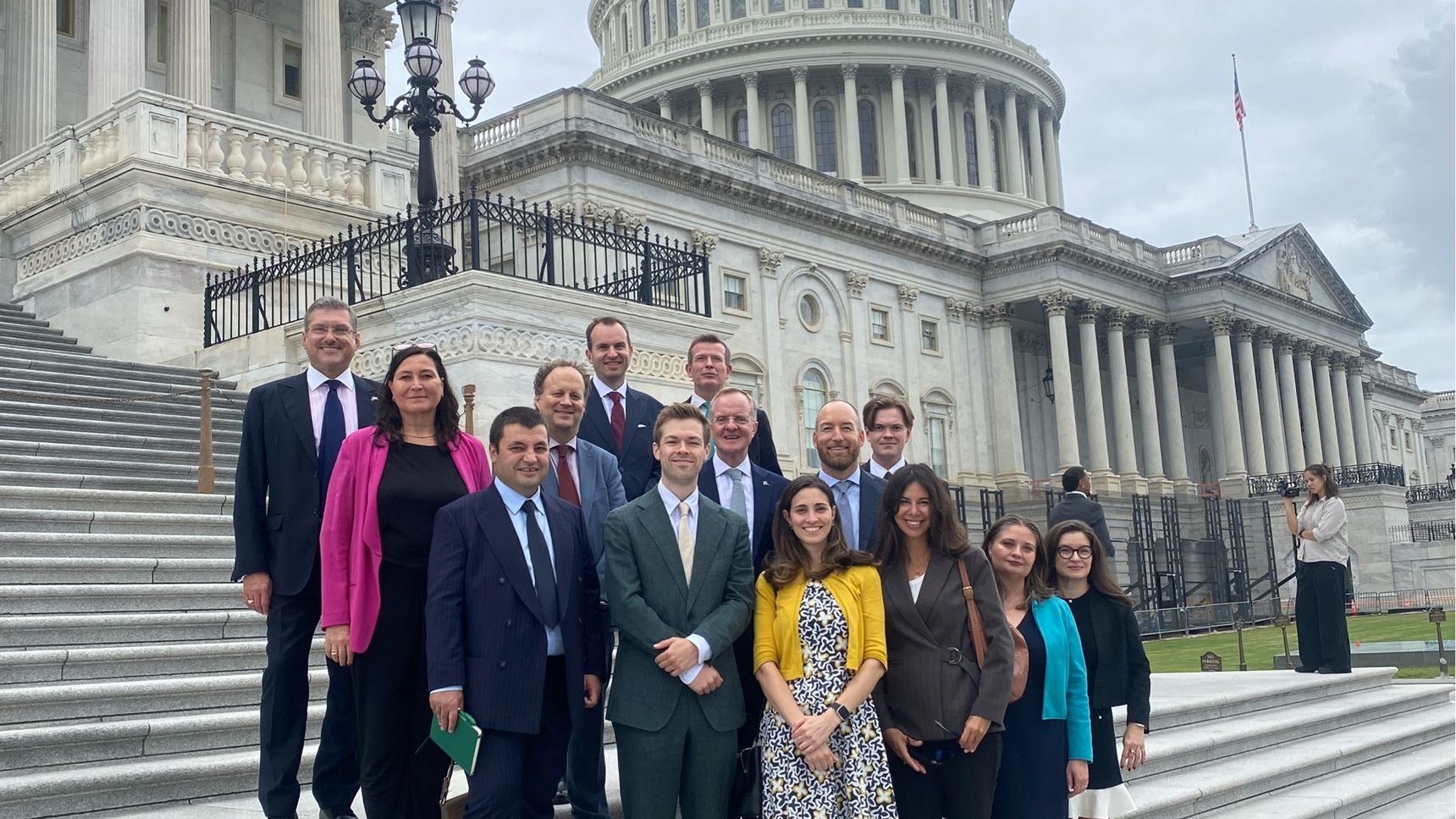
Making the case for the transatlantic relationship in Washington, DC
From Monday, 28 September to Thursday, 1 October 2026, AmCham EU led a delegation of members to Washington, DC to bring the views of the business community to policymakers in Congress and the administration. Discussions showed that both sides value the stability the Turnberry framework agreement brings. While parts of the agreement remain to be implemented, meetings pointed to the possibility for cooperation on economic security. Implementation will continue to need dialogue between the two sides, which is expected to carry on after the mid-term elections.

News
27 Jul 2026
Turnberry Deal has brought a degree of predictability to transatlantic trade and investment, anniversary survey finds

News
22 Jul 2026
Banking Competitiveness Report: Single Market integration and openness must drive reform
The European Commission’s Banking Competitiveness Report comes at a critical moment for Europe’s investment agenda. Closing Europe’s investment gap requires a banking sector able to mobilise capital at the scale the Savings and Investments Union demands. This is dependent on a Single Market that is not only competitive and integrated but open for all banks operating in the EU to act as facilitators of investment. The report provides a window of opportunity to anchor that openness at the centre of the competitiveness agenda.
The report correctly identifies a set of barriers holding back Europe’s banking competitiveness, both in the regulatory framework and in the way that framework is supervised. Undue complexity and divergent national implementation continue to raise the cost of financing for European households and businesses, underlining the need for an ambitious banking omnibus that simplifies rules and delivers greater consistency across the EU. At the same time, the report is right to call for a more proportionate, risk-focused supervisory culture that examines whether burdensome practices are weakening the attractiveness of Europe’s banking ecosystem. A new banking competitiveness agenda should build on both priorities: simpler, more coherent rules and supervision that enables internationally active banks to support investment.
Internationally active banks, including third-country groups with a substantial European footprint, are central to delivering this agenda. These institutions channel global capital to European companies, underpin the liquidity and depth of EU capital markets and help international investors finance opportunities in Europe. Europe remains a strategic market for these firms, and their investment demonstrates confidence in European growth, European companies and European opportunity.
The test of genuine integration is whether a banking group can serve customers across the Single Market without rebuilding its operations in each Member State. The report recognises that divergent national application of EU rules discourages banks from offering pan-European services and consequently results in costly duplication and regulatory burden across jurisdictions. A more competitive framework would enable European and international institutions to thrive in Europe, offering clients choice and a full suite of payment and banking services across the Single Market.
Coherent implementation will determine whether these reforms enhance competitiveness. Where the framework adapts international standards to EU specificities, the test should be whether the result preserves a level playing field for banks competing in global markets and remains consistent with the standards those banks apply across jurisdictions.
Policy priorities
Insights and advocacy driving Europe’s policy agenda. Our priorities support growth, innovation and a stronger transatlantic economy.
Membership
Connecting business and policymakers to strengthen the voice of American companies in Europe.