EU industrial ecosystems on the path to the green and digital transition
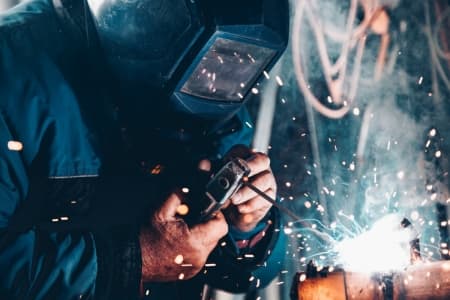
Industry is a critical sector in Europe, accounting for more than 32 million jobs. It is also an enabler of the economic recovery, powering the green and digital transitions across the Single Market. To improve the region’s global competitiveness, the EU’s industrial strategy should focus on digitalising European industry, creating the right environment for a clean future, accelerating the EU circular economy and reinforcing the rules-based trading system. Join the conversation this week at the EU Industry Days, which will focus on the role of youth in shaping the future of industry. Read more about our priorities here.
Related items
:focal())
Export controls fit for today's economy
The Dual-Use Regulation gives Europe a common framework for economic security, but divergent national implementation is weakening it. The same transaction can be assessed differently depending on the Member State, with guidance on cloud and software-as-a-service transfers remains unclear. Licensing processes, meanwhile, still assume a physical consignment rather than digital workflows, which sits poorly with how integrated global businesses operate. Companies bear the added cost and legal uncertainty, while the security benefit is limited. A single EU-wide approach to intangible transfers and closer alignment with the US and UK would make controls more predictable and let authorities focus on genuine risks. Read how the revision of the Dual-Use Regulation can deliver a harmonised and future-proof framework for Europe.
:focal())
Engaging with the Mexican Ambassador on stronger trade ties
On Wednesday, 2 September 2026, Malte Lohan, CEO, AmCham EU met with Esteban Moctezuma Barragán, Mexican Ambassador to the European Union, Belgium and Luxembourg, for an introductory meeting to exchange views on the transatlantic business relationship. Discussions focused on opportunities to deepen EU–Mexico economic ties following the signature of the Modernised Global Agreement and interim trade agreement earlier this year. AmCham EU looks forward to continued engagement with Ambassador Moctezuma and to supporting closer EU–Mexico economic cooperation.
:focal())
A greener Emerald Isle, a more future-ready Éire
Amazon has been active in Ireland for more than 20 years, investing in its operations, supporting small and medium-sized enterprises and contributing to communities across the country. Through recent projects in energy and education, the company is helping Ireland advance its climate and digital skills ambitions. In partnership with EnergyCloud Ireland, Amazon is supporting 500 families in Fingal with free tanks of hot water powered by surplus renewable energy. At the same time, the company is donating digital technology kits to every primary school in Ireland, helping teachers bring coding, computational thinking and digital literacy into the classroom. These initiatives show how private sector collaboration can support greener homes, stronger schools and a more future-ready Ireland. Read the full story on Invested in Europe.
Policy priorities
Insights and advocacy driving Europe’s policy agenda. Our priorities support growth, innovation and a stronger transatlantic economy.
Membership
Connecting business and policymakers to strengthen the voice of American companies in Europe.