Why Critical Raw Materials matter
The responsible sourcing of Critical Raw Materials (CRM) will determine the success of the EU's green and digital transitions. Making sure they are available for all sectors, from transport to technology, must remain a top priority for the EU and the US – which is why it's encouraging news that the two sides recently announced a new dialogue to strengthen and secure transatlantic CRM supply chains. But why are these materials so critical and how can policymakers ensure that industry has access to the responsibly-sourced CRMs it needs? Read our latest blog to find out.

Related items

Making web scraping rules work for AI
The European Data Protection Board’s draft guidelines on web scraping for generative AI are an opportunity to provide greater legal certainty and support Europe’s AI competitiveness. However, some proposed requirements risk creating disproportionate burdens for AI developers.
A pragmatic, risk-based approach is needed to ensure the rules reflect the technical realities of AI development. This includes proportionate transparency obligations, recognition of the need for diverse training datasets and greater alignment with the AI Act and Digital Omnibus. Clear, harmonised rules are essential to protect personal data while enabling innovation.
Read our consultation response to learn more about the recommendations.

On Thursday, 5 November, Malte Lohan, CEO, AmCham EU, spoke at a discussion hosted by Konrad-Adenauer-Stiftung Europe and the Federation of German Industries (BDI) on EU-US trade relations after the US midterms. Mr Lohan stressed that elections change the conversation, though not necessarily the outcomes. While the midterms shift power on Capitol Hill, he was not sure this would extend to transatlantic relations, certainly not in the short term. He noted the Turnberry Agreement has brought much-needed predictability, but the relationship remains volatile, with flashpoints ahead that could put stability at risk. The agreement should be solidified and built on, with a move from strategic autonomy to strategic complementarity that will resonate in Washington. Exploring new avenues for partnering where interests align is worthwhile for a $9.8 trillion relationship that employs over 16 million people on both sides of the Atlantic. Learn more about the latest EU-US trade developments in the Transatlantic Economy Pulse.
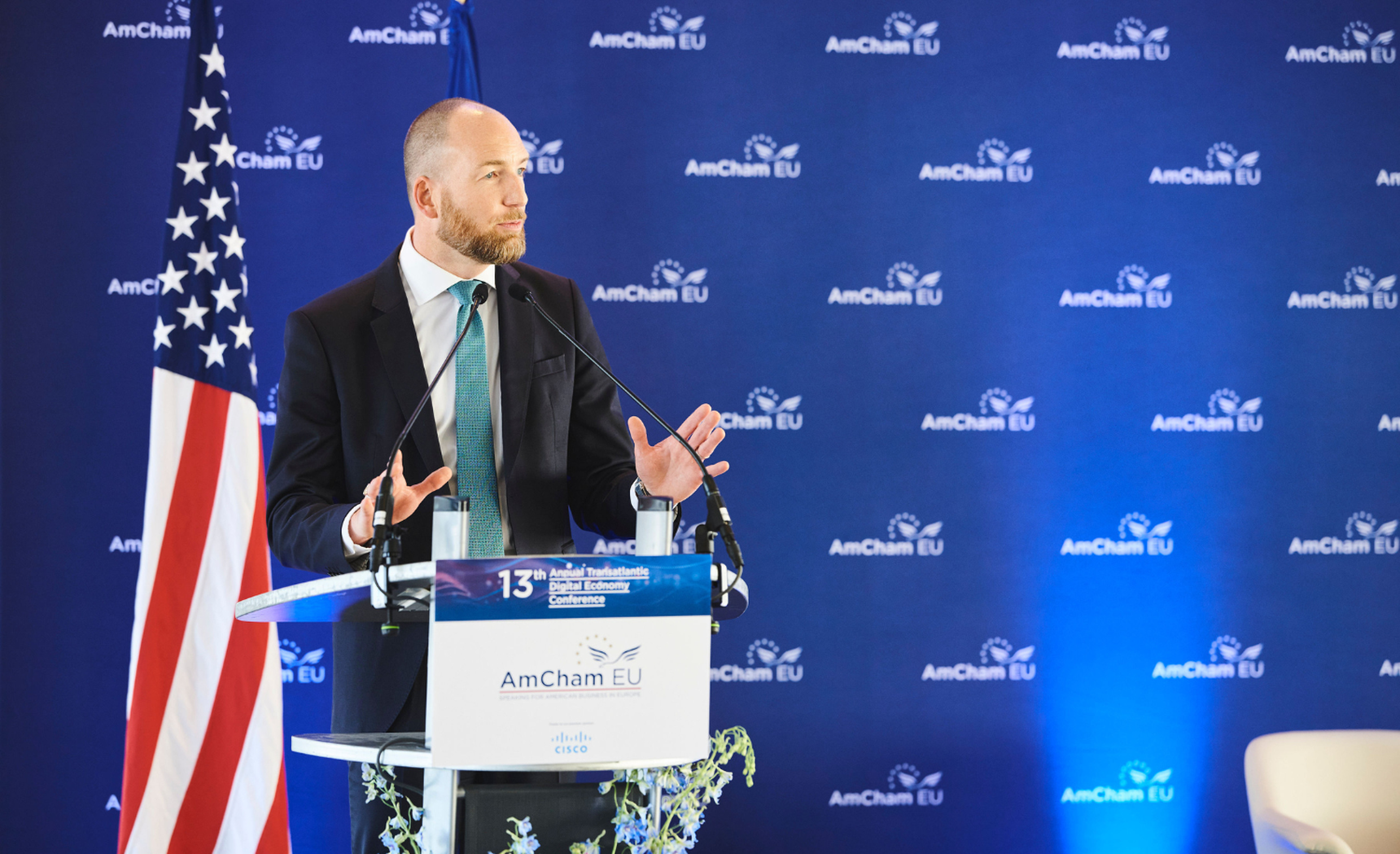
Digital Economy Conference 2026: in review
AmCham EU’s 13th Annual Transatlantic Digital Economy Conference took place on Thursday, 5 November, under the theme Cutting through complexity. The event brought together policymakers, regulators and industry leaders to discuss how clear, workable frameworks and closer EU-US cooperation can bring more coherence to the digital landscape and support economic growth.
Policy priorities
Insights and advocacy driving Europe’s policy agenda. Our priorities support growth, innovation and a stronger transatlantic economy.
Membership
Connecting business and policymakers to strengthen the voice of American companies in Europe.