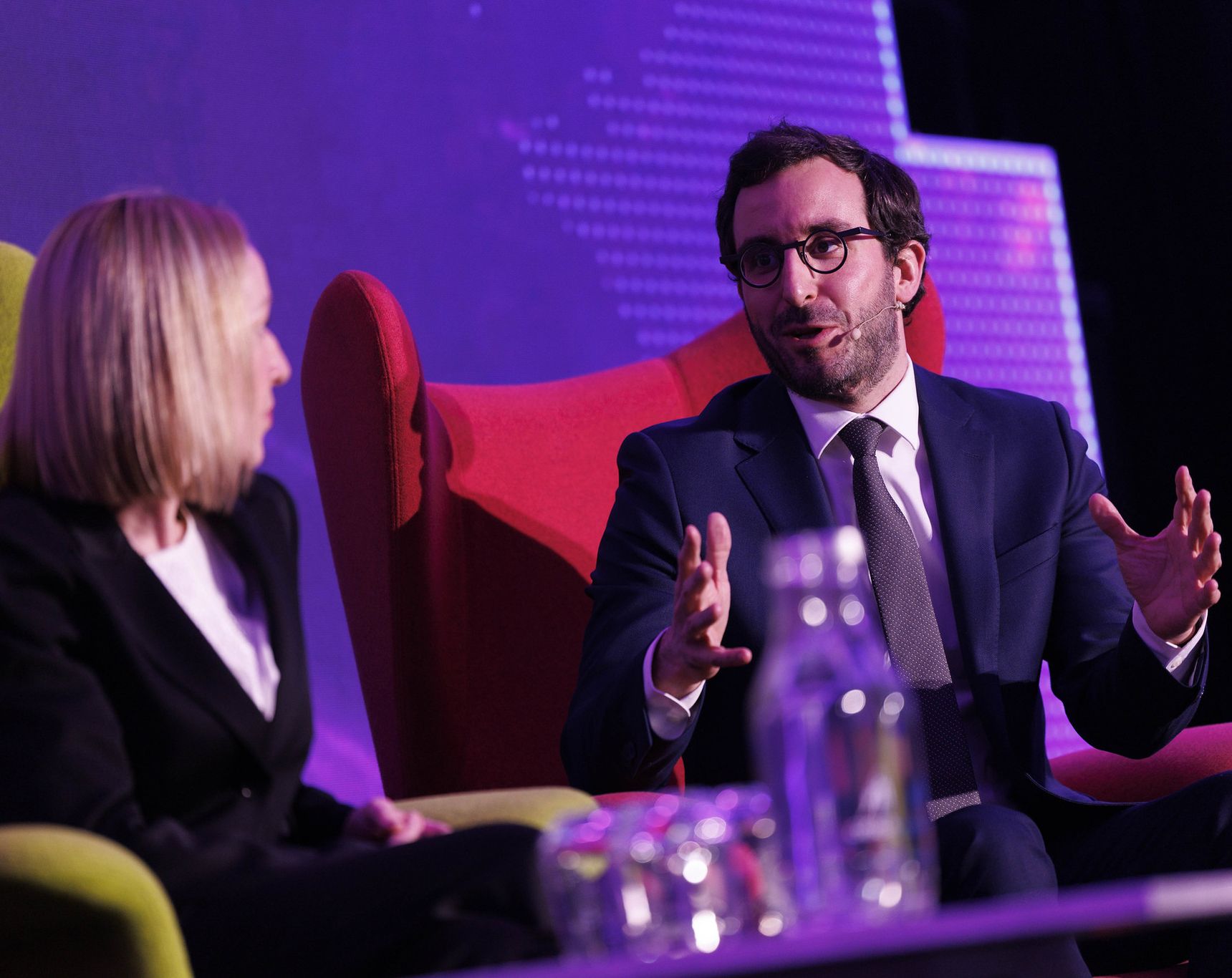
Ahead of Ireland assuming the Presidency of the Council of the EU in July, Thibaut L’Ortye, Chief Policy and Public Affairs Officer, AmCham EU joined business and policy leaders at the AmCham Ireland’s Global Business Conference to reflect on the opportunities facing Europe’s economy. Against a complex geopolitical backdrop, the conversation looked at how forthcoming EU initiatives can strengthen Europe’s attractiveness for investment and long-term growth. From simplification efforts and the Industry Accelerator Act to the 28th regime, the Biotech Act and progress on the Savings and Investment Union, the scale of the agenda is significant. A renewed focus on deepening the Single Market was a clear priority, alongside maintaining openness to foreign investment as a driver of innovation, competitiveness and a stronger industrial base across Europe. Joining Mr L’Ortye on the panel was Lucinda Creighton, Founder and CEO, Vulcan Consulting and Colm O'Callaghan, Director of Public Affairs and Advocacy, AmCham Ireland.
Taking stock of European competitiveness with AmCham Ireland
Related items
Better regulation: from simplification to delivery
On Tuesday, 17 November, AmCham EU hosted Michael Wimmer, Director, Simplification, Implementation and Enforcement, Secretariat-General of the European Commission, for a discussion on the EU’s simplification agenda. Following the launch of the Commission’s omnibus packages and other streamlining initiatives, the exchange took stock of progress and explored how the principles of ‘simplicity by design’ and tackling gold-plating can translate into tangible improvements for businesses. Participants discussed the importance of ensuring that simplification goes beyond how EU rules are written to address how they are implemented and enforced across Member States. The conversation also looked ahead to the priorities for the remainder of the Commission’s mandate. Learn why the Single Market is only as simple as its Member States make it

Keeping Europe open and competitive with our Executive Council
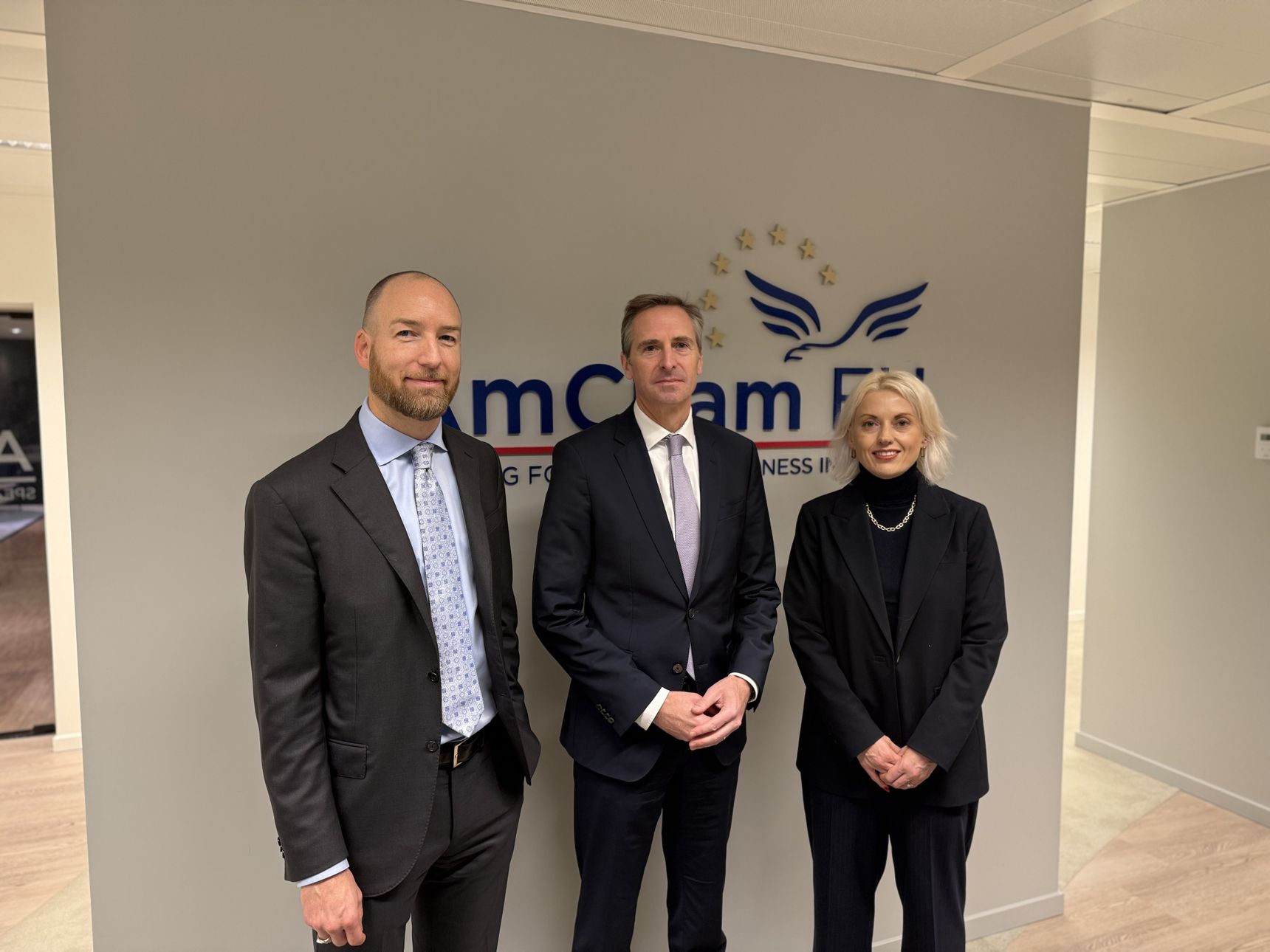
Predictability in EU-US relations and Europe’s competitiveness agenda, from simplification to European preference, were centre stage during our Executive Council Fall Plenary on Monday, 9 and Tuesday, 10 November. Our senior business leaders met with EU, US, Canadian and Member State policymakers, as well as industry and think-tank leaders, to discuss the pressures shaping investment decisions in Europe.
The group engaged with the following: Nerijus Aleksiejūnas, Permanent Representative of Lithuania to the European Union; Enrico Letta, President of the Jacques Delors Institute; Roxana Mînzatu, Executive Vice-President for Social Rights and Skills, Quality Jobs and Preparedness, European Commission; Andrew Puzder, Ambassador of the United States to the European Union; Jessika Roswall, European Commissioner for Environment, Water Resilience and a Competitive Circular Economy; Sir Jonathan Symonds, President of the European Round Table for Industry and Chair of GSK and Jonathan Wilkinson, Ambassador of Canada to the European Union.
Throughout the two days, exchanges explored how to maintain momentum on Single Market integration, deliver meaningful regulatory simplification and strengthen the role of industry in developing skills and creating quality jobs. Discussions also touched on the changing international trade landscape, the importance of EU-US cooperation and the priorities that will shape the upcoming Lithuanian Presidency of the Council of the EU.
Learn more about our Executive Council here.

Industry calls for repeal of the SCIP database
AmCham EU has joined over 30 industry associations in calling on EU co-legislators to confirm the repeal of the Substances of Concern In articles as such or in complex objects (Products) (SCIP) database, as proposed in the Environmental Omnibus. SCIP costs companies around €225 million a year, yet its intended users, recyclers, barely use it. The Commission itself acknowledges that waste operators find the data unusable and most companies lack the resources to maintain millions of notifications. Repeal would remove a disproportionate reporting layer while keeping obligations for suppliers to inform customers about substances of very high concern. Any future approach should build on existing obligations, not add new ones.
Policy priorities
Insights and advocacy driving Europe’s policy agenda. Our priorities support growth, innovation and a stronger transatlantic economy.
Membership
Connecting business and policymakers to strengthen the voice of American companies in Europe.