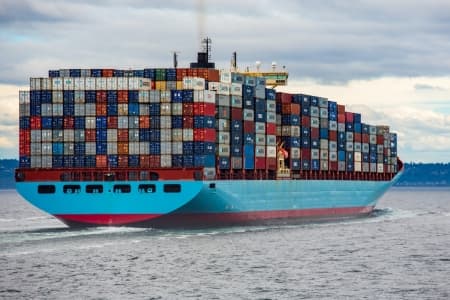
AmCham EU welcomes the conclusion of the negotiations on the EU-Chile Advanced Framework Agreement and encourages a swift ratification process. The deal has the potential to advance the bilateral economic relationship between Chile and the EU as well as strengthen the EU’s global trade network. AmCham EU also renews previous calls on EU institutions to reignite efforts to make progress on the several ongoing negotiations on free trade agreements (FTAs) with third countries.
EU-Chile Agreement: AmCham EU welcomes conclusion and renews calls for progress on all EU trade agreements
AmCham EU welcomes the conclusion of the negotiations on the EU-Chile Advanced Framework Agreement and encourages a swift ratification process. The deal has the potential to advance the bilateral economic relationship between Chile and the EU as well as strengthen the EU’s global trade network. AmCham EU also renews previous calls on EU institutions to reignite efforts to make progress on the several ongoing negotiations on free trade agreements (FTAs) with third countries.

Trade negotiations that are already far advanced, such as those with Australia and Indonesia, should be brought to a swift conclusion. Moreover, the EU should ratify deals that are concluded, such as the agreements with Mexico, MERCOSUR, New Zealand and the investment chapter of the EU-Canada Comprehensive Economic and Trade Agreement (CETA). There should also be continued progress on the talks with India.
These agreements not only open new market opportunities, but are also essential tools to boost the global economy. They will enable companies to further diversify their supply chains as well as provide increased benefits to consumers and society at large. Negotiating evidence-based agreements that are standard-setters, that reduce administrative burden and promote sustainable development is critical. These will ensure the EU’s remains competitive and an attractive place for foreign investment. In light of the difficult geopolitical environment, the EU’s leadership on an ambitious trade agenda is even more important than ever.
Related items
:focal())
The Transatlantic Economy 2026
Following a year of political and trade tensions between Europe and the United States, commercial ties between the two sides – the deepest and broadest between any two regions in history – have held remarkably strong. In a new study from the American Chamber of Commerce to the EU (AmCham EU) and the US Chamber of Commerce, authors Daniel Hamilton and Joseph Quinlan value the transatlantic economy at a record $9.8 trillion in 2025, up from $9.5 trillion the previous year. This figure comprises an estimated record $2.3 trillion in goods and services trade between Europe and the United States and $7.5 trillion in combined affiliate sales.
:focal())
Statement on Section 301 investigations
On Wednesday, 11 March, the United States Trade Representative launched Section 301 investigations into structural production overcapacity against a range of economies, including the European Union. We understand that this decision is part of a larger attempt to stabilise the US tariff system in the wake of the Supreme Court ruling striking down the International Emergency Economic Powers Act (IEEPA) tariffs.
The American Chamber of Commerce to the European Union (AmCham EU) is concerned about the continued uncertainty of the current trade environment. Companies still lack clarity over future tariff rates in both the short- and long-term. We continue to oppose broad-based tariffs as they raise costs for businesses and consumers and disrupt supply chains.
With potential measures against the EU under consideration, AmCham EU calls on the EU and the US to avoid escalation in the trade dispute. The priority must be to restore stability and predictability in transatlantic trade. The deal struck in the summer is not a perfect solution, but it offers the most realistic path forward given political priorities on both sides. We look to the parties to honour their commitments under the EU-US Framework Agreement.
The US Administration rightfully identifies overcapacity as a critical issue in the global economy which also affects the European market. We see the EU as part of the solution, rather than the problem. The EU and the US must work together to tackle the real issue at hand: unfair trading practices from non-market economies.
:focal())
Business backs provisional application of the EU–Mercosur Partnership Agreement
Business associations have expressed full support for the European Commission’s decision to provisionally apply the EU–Mercosur Interim Trade Agreement. The move marks a decisive step towards implementation after more than 25 years of negotiations. The economic case is compelling. The European Commission estimates indicate that, once fully implemented, the Agreement could increase EU exports to Mercosur by nearly 40%, generating €48.7 billion in additional annual exports and €77.6 billion in annual EU GDP gains by 2040. At the same time, prolonged delays have carried significant costs for European competitiveness. Swift operationalisation of the Agreement will enhance market access, diversify trade relationships and reinforce the EU’s leadership in sustainable, rules-based trade.
Policy priorities
Insights and advocacy driving Europe’s policy agenda. Our priorities support growth, innovation and a stronger transatlantic economy.
Membership
Connecting business and policymakers to strengthen the voice of American companies in Europe.