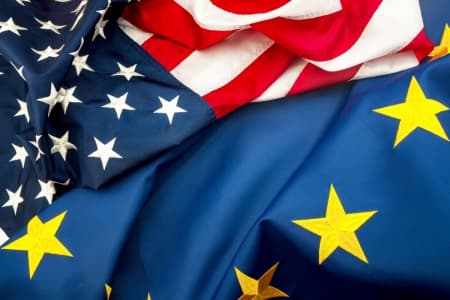
On Sunday, 31 October, the EU and the US announced a pause in the transatlantic trade dispute over steel and aluminium tariffs. The US will partially remove Section 232 tariffs (up to historic trade volumes), while the EU will suspend its retaliatory measures. Both sides also agreed to start negotiations on a Global Arrangement on Sustainable Steel and Aluminium.
EU and US reach deal on steel and aluminium tariff dispute
On Sunday, 31 October, the EU and the US announced a pause in the transatlantic trade dispute over steel and aluminium tariffs. The US will partially remove Section 232 tariffs (up to historic trade volumes), while the EU will suspend its retaliatory measures. Both sides also agreed to start negotiations on a Global Arrangement on Sustainable Steel and Aluminium.

The American Chamber of Commerce to the EU (AmCham EU) commends the EU and the US for putting an end to a major irritant in the EU-US relationship and charting a path for a more forward-looking approach to tackling global overcapacity of steel and aluminium. No one stood to win from further tit-for-tat measures. These tariffs failed to address unfair trading practices, the root cause of this issue, and only hurt jobs, prosperity and security on both sides of the Atlantic.
The deal demonstrates the crucial role the EU and the US can play when they work together, fighting climate change and addressing unfair trading practices. The fact that other like-minded countries will be able to join this initiative also shows how transatlantic leadership can be an engine for multilateralism. As talks unfold for this new arrangement, compliance with World Trade Organization (WTO) rules will remain critical. The rules-based trading system provides the certainty that companies need to operate globally.
This announcement comes after a series of positive developments in the transatlantic relationship, including a pause on the long-standing aircraft subsidies dispute as well as a range of initiatives launched at the EU-US summit in June, including the creation of the Trade and Technology Council (TTC). The TTC provides a unique platform to make progress on connected issues, such as strengthening supply chains, promoting global standards, reforming the WTO and developing a joint approach to non-market economies. Read more about AmCham EU’s priorities for the TTC here.
Related items
:focal())
Council vote clears way for landmark EU-Mercosur free trade agreement
EU Member States’ decision to approve the EU-Mercosur free trade agreement is a major victory for the EU’s free trade agenda. For companies in the EU, the agreement promises to support deeper integration of value chains and facilitate access to a market of 284 million consumers. This will contribute to more resilient and diversified supply chains, including access to critical raw materials essential for the EU’s economic security and industrial growth.
AmCham EU praises the European Commission for its work with Member States to ensure the deal benefits all sectors of the EU economy. By concluding Mercosur’s first trade agreement with a major global partner, the EU demonstrates its commitment to open and rules-based trade. The European Parliament must now approve the agreement without delay, so that – after 25 years of negotiations – businesses and citizens can start benefiting from this deal.
Reacting to the news, Malte Lohan, CEO, AmCham EU, stressed the importance of the agreement: ‘The Council’s decision is a timely one. In today’s world, the EU needs to boost its economic competitiveness and maintain its free trade leadership. The EU-Mercosur agreement ticks both boxes’.
‘The business case is clear; the geopolitical case is clear. It is now the Parliament’s job to see the agreement across the finish line’, he added.
:focal())
No further delays: the EU-Mercosur FTA is vital for a stronger Europe
The European Council’s decision to postpone its vote on concluding the EU-Mercosur free trade agreement (FTA) is a missed strategic opportunity that threatens the EU’s credibility as a reliable partner. After more than 20 years of negotiations, the EU is once again delaying one of its most ambitious and strategic trade agreements.
The EU-Mercosur FTA’s economic benefits are clear. At a time when strengthening competitiveness, economic growth and partnerships should be paramount, the FTA provides access to a market of 284 million consumers – reducing tariff and non-tariff barriers and supporting integrated supply chains.
Beyond its economic benefits, the EU-Mercosur FTA is also an important geopolitical tool. It would anchor a long-term strategic partnership with a key region and reinforce the EU’s role as a credible advocate of rules-based trade. Amid heightened geopolitical rivalry, postponement weakens the EU’s standing and its ability to conclude ambitious FTAs elsewhere.
The EU cannot afford further delays. The EU-Mercosur FTA is vital for the region’s competitiveness, resilience and global credibility. The European Council must promptly return to this file and conclude this FTA in January.
:focal())
Exploring transatlantic ties at AmCham Luxembourg
On Tuesday 2 December, Thibaut L’Ortye, Senior Director of Public Affairs, AmCham EU presented The Transatlantic Economy 2025 report at AmCham Luxembourg’s Transatlantic Trade and Investment event. Stacey Feinberg, US Ambassador to Luxembourg highlighted the strong ties between Luxembourg and the US, with over 150,000 people employed thanks to the partnership. During his section, Mr L’Ortye presented the results of the report, with a particular focus on the resiliency of the EU-US relationship. Despite differing views on certain issues, the transatlantic partnership remains the most integrated in the world, directly responsible for 16 million jobs and one third of global GDP.
Policy priorities
Insights and advocacy driving Europe’s policy agenda. Our priorities support growth, innovation and a stronger transatlantic economy.
Membership
Connecting business and policymakers to strengthen the voice of American companies in Europe.