The Public Procurement Act: incentivising quality
A procurement policy that buyers can use
The EU spends around 15% of gross domestic product on public procurement every year. The Public Procurement Act (PPA) can make that spending simpler and fairer, and give better value for taxpayers by consolidating rules, digitalising procedures and encouraging buyers to weigh quality alongside price.
However, public buyers have limited financial and human resources, and a framework that incentivises quality asks more of them. Buyers will use the strategic elements of the PPA only if they don’t require too many resources and if they feel protected from litigation. The PPA must not only require them to buy strategically but help them feel comfortable doing so.
The PPA aims to make procurement easier and more strategic by:
Consolidating procedures and creating a single eProcurement entry point built on ‘report once, use many times’.
Requiring the use of a flexible ‘best quality for money’ framework.
Moving towards common approaches to value criteria, European preference and risk criteria.
Introducing an innovation procedure with more protection for suppliers’ intellectual property.
Proposing a European preference framework that lets buyers select the right option for their tenders while reinforcing the EU’s market access agreements.
Priorities for an eff ective PPA
For the PPA to deliver value-driven procurement, policymakers should preserve its simplification provisions and add clarity, consistency and transitional support.
The PPA depends on digital infrastructure that will not exist when the act first applies. A published roadmap and interim procedures would make convergence immediately possible and stop over 1,000 buyers from improvising their own rules.
Want to learn more?
Read our full recommendations on how to make the PPA work in practice.
Related items
Better regulation: from simplification to delivery
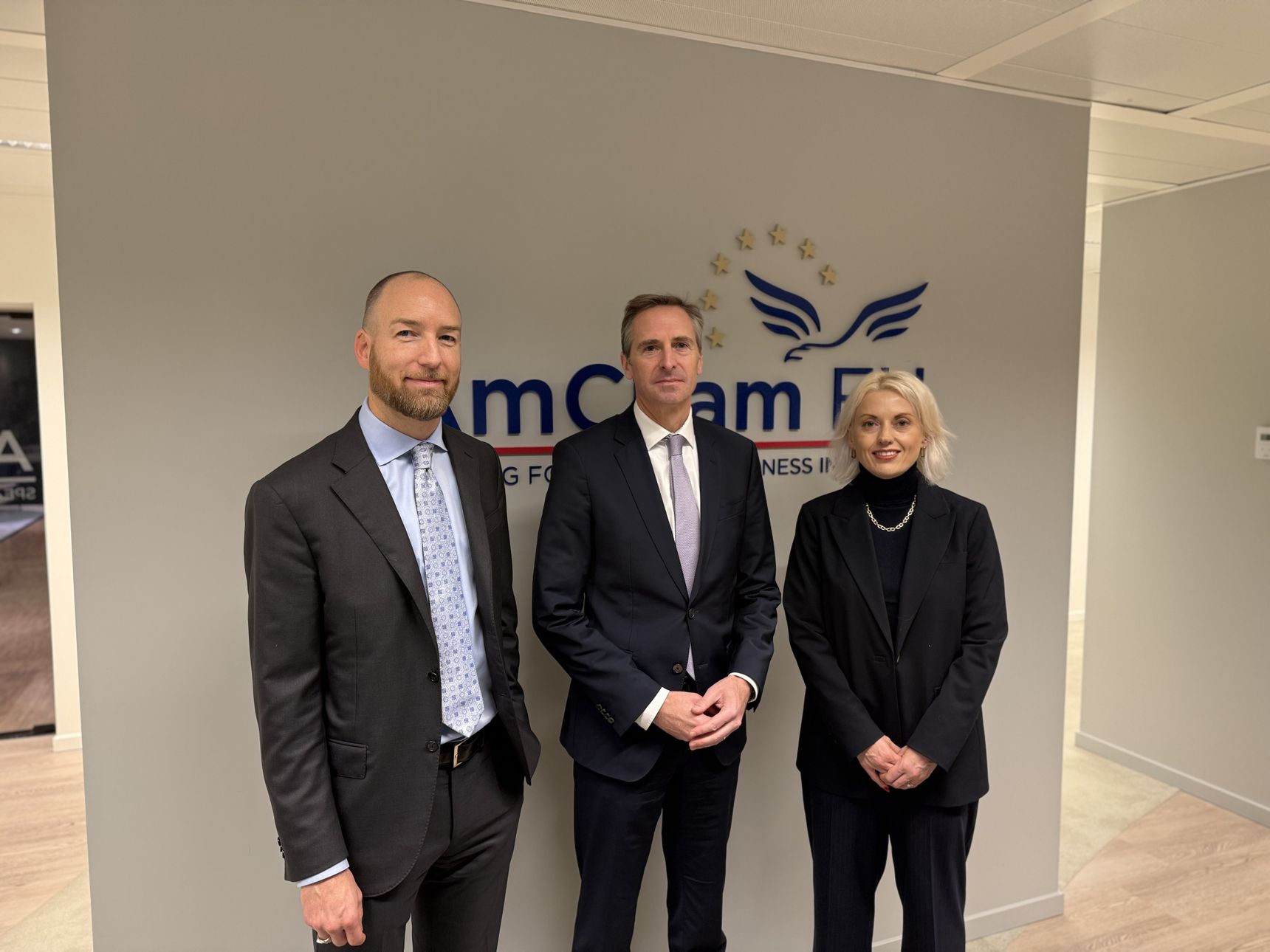
On Tuesday, 17 November, AmCham EU hosted Michael Wimmer, Director, Simplification, Implementation and Enforcement, Secretariat-General of the European Commission, for a discussion on the EU’s simplification agenda. Following the launch of the Commission’s omnibus packages and other streamlining initiatives, the exchange took stock of progress and explored how the principles of ‘simplicity by design’ and tackling gold-plating can translate into tangible improvements for businesses. Participants discussed the importance of ensuring that simplification goes beyond how EU rules are written to address how they are implemented and enforced across Member States. The conversation also looked ahead to the priorities for the remainder of the Commission’s mandate. Learn why the Single Market is only as simple as its Member States make it

Keeping Europe open and competitive with our Executive Council
Predictability in EU-US relations and Europe’s competitiveness agenda, from simplification to European preference, were centre stage during our Executive Council Fall Plenary on Monday, 9 and Tuesday, 10 November. Our senior business leaders met with EU, US, Canadian and Member State policymakers, as well as industry and think-tank leaders, to discuss the pressures shaping investment decisions in Europe.
The group engaged with the following: Nerijus Aleksiejūnas, Permanent Representative of Lithuania to the European Union; Enrico Letta, President of the Jacques Delors Institute; Roxana Mînzatu, Executive Vice-President for Social Rights and Skills, Quality Jobs and Preparedness, European Commission; Andrew Puzder, Ambassador of the United States to the European Union; Jessika Roswall, European Commissioner for Environment, Water Resilience and a Competitive Circular Economy; Sir Jonathan Symonds, President of the European Round Table for Industry and Chair of GSK and Jonathan Wilkinson, Ambassador of Canada to the European Union.
Throughout the two days, exchanges explored how to maintain momentum on Single Market integration, deliver meaningful regulatory simplification and strengthen the role of industry in developing skills and creating quality jobs. Discussions also touched on the changing international trade landscape, the importance of EU-US cooperation and the priorities that will shape the upcoming Lithuanian Presidency of the Council of the EU.
Learn more about our Executive Council here.
Industry calls for repeal of the SCIP database
AmCham EU has joined over 30 industry associations in calling on EU co-legislators to confirm the repeal of the Substances of Concern In articles as such or in complex objects (Products) (SCIP) database, as proposed in the Environmental Omnibus. SCIP costs companies around €225 million a year, yet its intended users, recyclers, barely use it. The Commission itself acknowledges that waste operators find the data unusable and most companies lack the resources to maintain millions of notifications. Repeal would remove a disproportionate reporting layer while keeping obligations for suppliers to inform customers about substances of very high concern. Any future approach should build on existing obligations, not add new ones.
Policy priorities
Insights and advocacy driving Europe’s policy agenda. Our priorities support growth, innovation and a stronger transatlantic economy.
Membership
Connecting business and policymakers to strengthen the voice of American companies in Europe.