The American Chamber of Commerce to the European Union (AmCham EU) shares the European Commission’s vision that common European data spaces will create an enabling environment where market participants feel empowered to share and re-use data and are in control of their data. At the heart of the proposed data spaces are the users, who need certainty that their data is handled in a responsible manner. The success of the EU data strategy depends on establishing data governance mechanisms and structures that foster an open and inclusive approach, built on responsible and values-driven data sharing. We are convinced there is an opportunity to develop a better culture of data sharing in Europe, and that ultimately this will contribute to boosting the EU data economy.
AmCham EU and our members are committed to continuing the dialogue with policymakers and stakeholders on the essential role of data in domains of public interest and for the EU economy.
Roadmap on the legislative framework for the governance of common European data spaces
Related items

Making CADA’s sovereignty framework work for Europe
The success of the Cloud and AI Development Act (CADA) will depend on whether its sovereignty framework strengthens Europe’s resilience and competitiveness without restricting access to the technologies, providers and operating models needed to support the bloc’s digital transformation. As currently envisaged, several elements of CADA introduce origin-based restrictions that are not necessarily linked to genuine sovereignty, security or resilience risks. These measures could reduce competition, increase costs and slow cloud and AI adoption – ultimately working against CADA’s underlying objectives.
A sovereignty framework built on objective, risk-based criteria will better support Europe’s competitiveness, resilience and digital transformation than one based on origin, ownership or nationality.

Branching out with AI
Meta’s open-source Canopy Height Maps helped the European Commission’s Joint Research Centre improve its 2020 Global Forest Cover map, demonstrating how artificial intelligence can strengthen Europe’s ability to monitor forests and advance climate and biodiversity goals. Developed with the World Resources Institute, the maps use Meta’s DINO self-supervised computer vision model to estimate tree height from satellite imagery. This helped researchers apply the five-metre threshold used in many international forest definitions and better distinguish forests from other tree-covered land, including agricultural tree crops. The resulting product, available through the EU Forest Observatory, provides one of the most comprehensive open views of global forest cover. Read more on Invested in Europe.
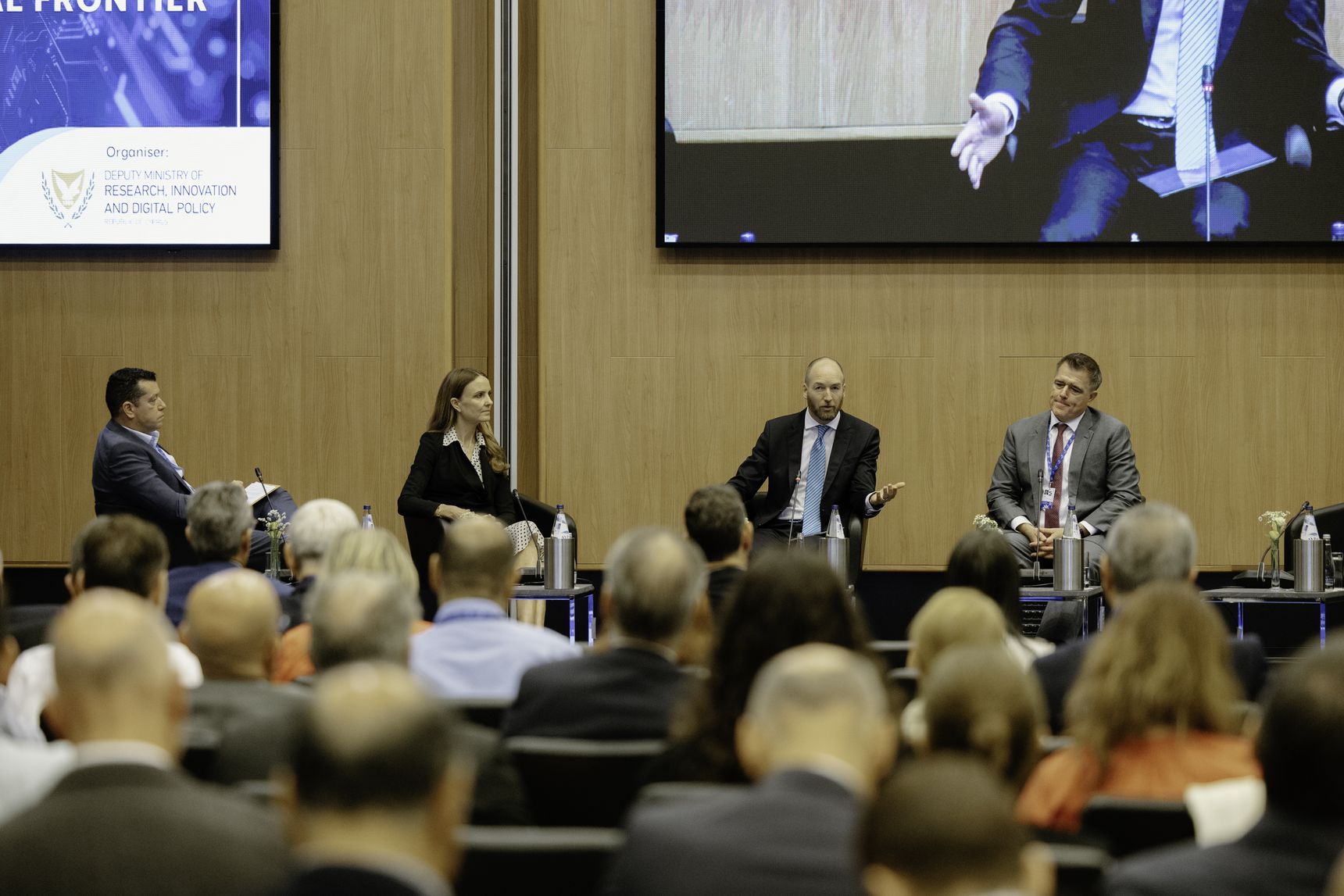
Examining Europe’s AI ambitions with the Cypriot Presidency of the Council of the EU
How can Europe strengthen its digital resilience while remaining open to the partnerships that drive AI innovation? On Wednesday, 17 June, Malte Lohan, CEO, AmCham EU, addressed this at a conference organised by the Cypriot Presidency of the Council of the EU in Nicosia, Cyprus. Discussions focused on how Europe can build a more resilient digital ecosystem while remaining an attractive destination for investment and innovation. Mr Lohan underlined that secure supply chains and trusted partnerships are essential to Europe’s AI competitiveness. He also highlighted the role of US businesses as committed partners in helping Europe build and compete globally, while stressing the need for balanced policies that strengthen resilience and give companies the confidence to invest in Europe.
Policy priorities
Insights and advocacy driving Europe’s policy agenda. Our priorities support growth, innovation and a stronger transatlantic economy.
Membership
Connecting business and policymakers to strengthen the voice of American companies in Europe.