AmCham EU response to Green Deal call area 8: a zero pollution ambition for a toxic-free environment
Position Paper
14 Jun 2020
Environment

Please see linked the paper titled "AmCham EU response to Green Deal call area 8: a zero pollution ambition for a toxic-free environment: Grouping of PFAS Regulation by distinct PFAS classes is scientifically superior to classification by a broad PFAS group."

The American Chamber of Commerce to the EU (AmCham EU) welcomes the opportunity to comment on the Green Deal call area 8: Innovative, systemic zero-pollution solutions to protect health, environment and natural resources from persistent and mobile chemicals. Although we support its objective of fostering further research into the health and environmental impact of PFAS substances as well as further development of reliable analytical methods to measure their presence, we are concerned by some statements made by the European Commission in this Green Deal call which we believe ignore scientific facts. From a scientific perspective, trying to restrict PFAS as a class is not scientifically justifiable because it attempts to classify inert solids, liquids, salts and gases in a single class where intrinsic properties such as hazard, vapour pressure, and environmental partitioning are enormously varied.

Related items

Position Paper
22 Oct 2026

Industry calls for repeal of the SCIP database

AmCham EU has joined over 30 industry associations in calling on EU co-legislators to confirm the repeal of the Substances of Concern In articles as such or in complex objects (Products) (SCIP) database, as proposed in the Environmental Omnibus. SCIP costs companies around €225 million a year, yet its intended users, recyclers, barely use it. The Commission itself acknowledges that waste operators find the data unusable and most companies lack the resources to maintain millions of notifications. Repeal would remove a disproportionate reporting layer while keeping obligations for suppliers to inform customers about substances of very high concern. Any future approach should build on existing obligations, not add new ones.

Environment
Simplification
Read more
Read more about Industry calls for repeal of the SCIP database
News
13 Oct 2026

Simpler chemicals rules, same level of protection

Europe has an opportunity to make its chemicals rules simpler without weakening the protection they provide. The Commission plans to simplify the Regulation on Registration, Evaluation, Authorisation and Restriction of Chemicals (REACH) through secondary legislation. Rules that are proportionate, clearly scoped and grounded in evidence are easier to follow and easier to enforce. They also give companies the certainty they need to invest and keep producing in Europe. Read our recommendations for a REACH that is simpler to apply and better for competitiveness.

Environment
Read more
Read more about Simpler chemicals rules, same level of protection
News
13 Oct 2026

From fryer to fuel

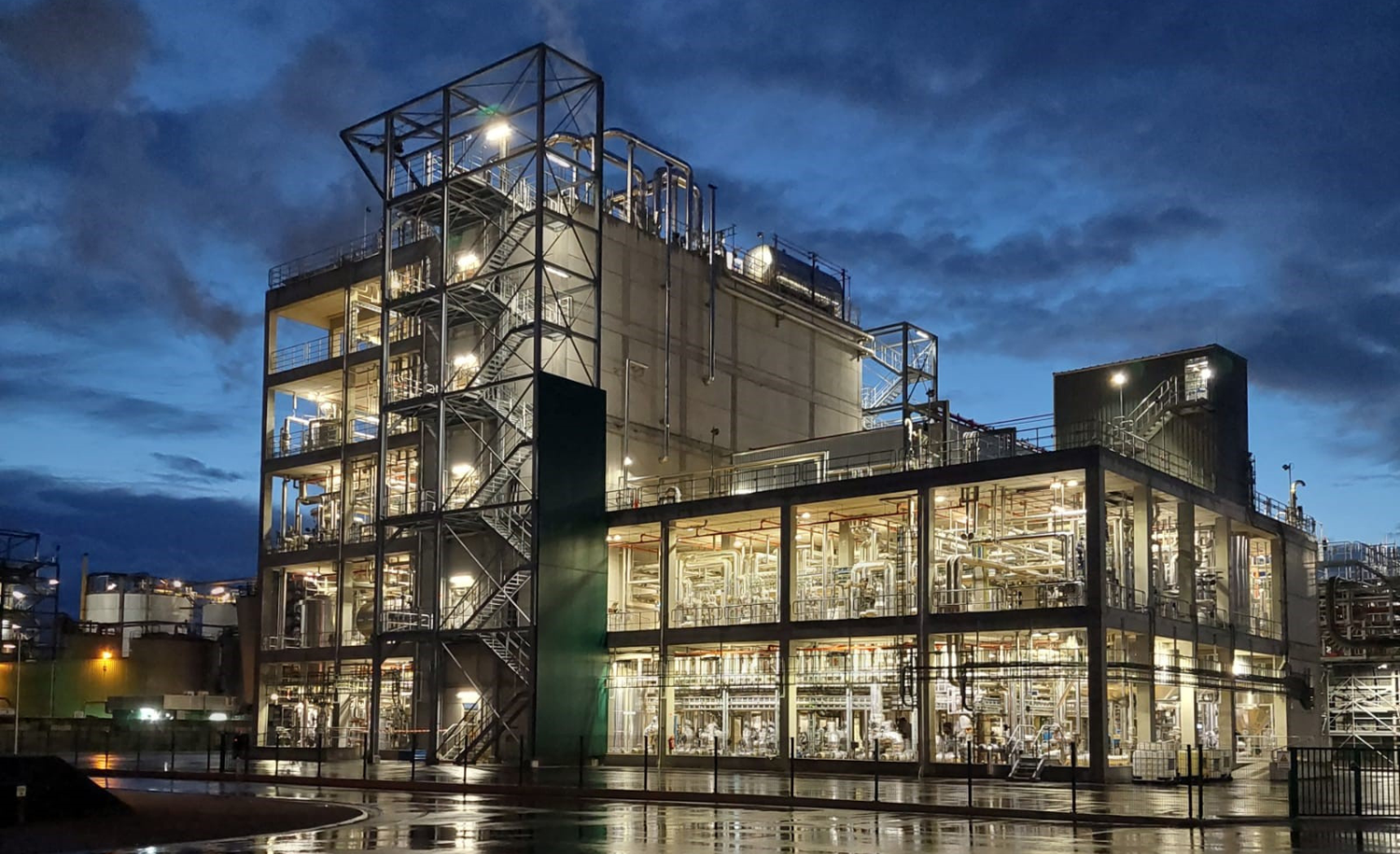
After frying frites, bitterballen, churros or arancini, many people don’t think twice about disposing of used cooking oil. Yet one litre of waste oil can contaminate one million litres of water, according to the European Commission. At Cargill’s facility in the port of Ghent, Belgium, used cooking oil and other residual oils and fats are treated as raw materials, cleaned and converted into biodiesel for trucks and ships. This puts circularity into practice on an industrial scale at one of Europe’s largest facilities of its kind. Since production began, Ghent’s biodiesel is estimated to have reduced greenhouse gas emissions by 1,188,000 tonnes compared with fossil diesel, equivalent to taking about 550,000 cars off the road for a year. Read the full story on Invested in Europe.

Environment
Read more
Read more about From fryer to fuel