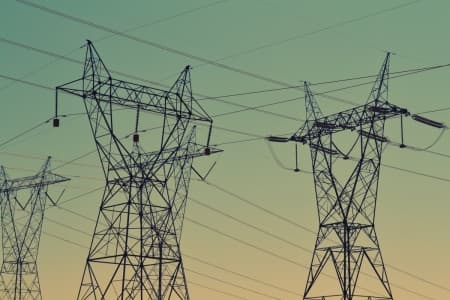
As Europe’s winter begins in earnest, consumers and businesses alike are struggling with soaring energy costs. In response, the European Commission and Council of the European Union have stepped in with proposals to combat rising gas prices, further reduce gas demand in Europe and enhance critical infrastructure. These issues were front of mind when EU energy ministers met in December to debate a temporary gas market correction mechanism.
What comes next for EU energy policy?
As Europe’s winter begins in earnest, consumers and businesses alike are struggling with soaring energy costs. In response, the European Commission and Council of the European Union have stepped in with proposals to combat rising gas prices, further reduce gas demand in Europe and enhance critical infrastructure. These issues were front of mind when EU energy ministers met in December to debate a temporary gas market correction mechanism.

For both the public and private sector, this is far from the end of the conversation about the energy crisis. AmCham EU's new position paper lays out American industry’s views on a wide array of ongoing energy policy work from the EU institutions. Above all, the EU institutions must follow better regulation principles and avoid conflicting requirements in order to maintain the bloc’s attractiveness for investment and protect consumers and companies from unaffordable energy prices.
Read AmCham EU’s position on short, medium and long-term proposals aimed at ameliorating the energy crisis.
Related items
A Circular Economy Act for a sustainable and competitive Single Market
The upcoming Circular Economy Act represents a crucial opportunity to address longstanding business challenges through simplification and the strengthening of the Single Market. Its success depends on revising the Waste Framework Directive (WFD) and the Waste Electrical and Electronic Equipment (WEEE) Directive, re-opening some provisions of the Waste Shipment Regulation (WSR) and the Single Market Transparency Directive, promptly adopting secondary legislation under the Packaging and Packaging Waste Regulation (PPWR) and implementing financial flanking measures where necessary.
From tangled to tidy: can the Environmental Omnibus simplify Europe’s green transition?
Europe’s environmental rules have become increasingly complex, creating contradictory and duplicative requirements that undermine the EU’s competitiveness globally. With the Environmental Omnibus, the EU has an opportunity to streamline its most complex rules. Tackling overlaps, inconsistencies and excessive reporting obligations would improve legal clarity, enhance predictability and strengthen the business case for investment and the clean transition. From permitting to product sustainability, waste, chemicals and beyond, learn why clearer rules will drive Europe’s competitiveness and accelerate the green transition.
Reinforcing the Carbon Border Adjustment Mechanism for future scope extension
Policy priorities
Insights and advocacy driving Europe’s policy agenda. Our priorities support growth, innovation and a stronger transatlantic economy.
Membership
Connecting business and policymakers to strengthen the voice of American companies in Europe.