Towards carbon-free farming with bio-methane
New Holland Agriculture, part of the CNH Industrial group, has pioneered sustainable, innovative solutions through its Clean Energy Leader strategy. One strand of its research activity has focused on using bio-methane generated from agricultural waste to power farming equipment, with the aim of achieving carbon-free agricultural operations. This led to the development of New Holland’s methane-powered tractor, an all-purpose machine that can be used for a wide range of tasks – field work, jobs around the farm yard and pulling trailers.
Learn more at The Green Way and join the conversation on Twitter with #EUGreenWay.

Related items

Industry calls for repeal of the SCIP database
AmCham EU has joined over 30 industry associations in calling on EU co-legislators to confirm the repeal of the Substances of Concern In articles as such or in complex objects (Products) (SCIP) database, as proposed in the Environmental Omnibus. SCIP costs companies around €225 million a year, yet its intended users, recyclers, barely use it. The Commission itself acknowledges that waste operators find the data unusable and most companies lack the resources to maintain millions of notifications. Repeal would remove a disproportionate reporting layer while keeping obligations for suppliers to inform customers about substances of very high concern. Any future approach should build on existing obligations, not add new ones.
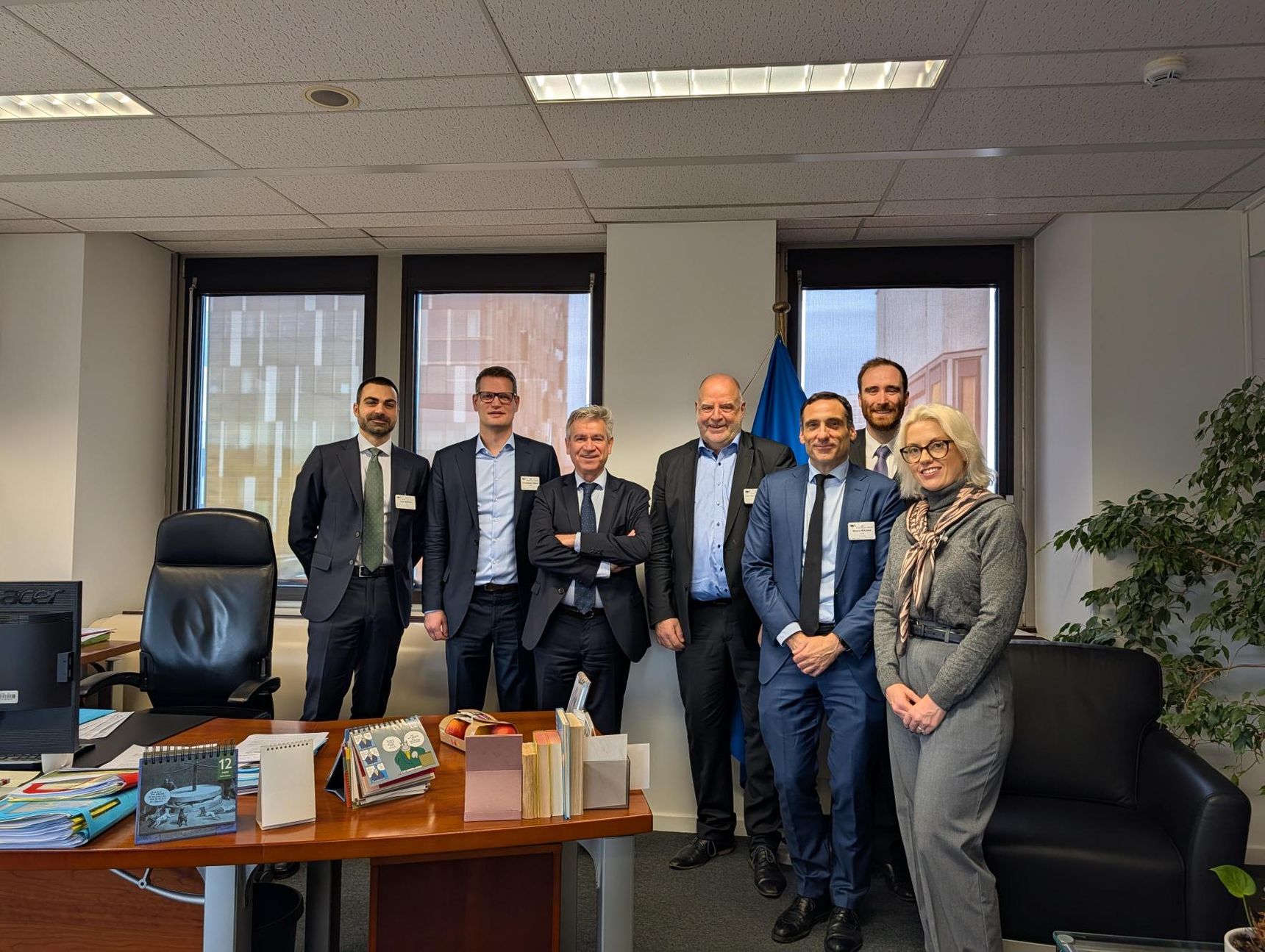
Building fairer food supply chains
On Wednesday, 21 October, AmCham EU met with Pierre Bascou, Director for Sustainability and Income Support, Directorate-General for Agriculture and Rural Development, European Commission, to discuss the revision of the EU’s Unfair Trading Practices (UTP) Directive. The exchange focused on removing existing thresholds, expanding the list of prohibited practices and strengthening protection for those reporting unfair trading practices. Edouard Coppieters, Senior Policy Adviser and Kim Watts, Policy Director, AmCham EU highlighted that companies of all sizes can face unfair trading practices. Across the agri-food supply chain, operators often contend with price volatility and legal pressure, particularly where bargaining power is unequal. The revision presents an opportunity to address these imbalances, strengthen protections and ensure a level playing field for all actors across the food supply chain.
Simpler chemicals rules, same level of protection
Europe has an opportunity to make its chemicals rules simpler without weakening the protection they provide. The Commission plans to simplify the Regulation on Registration, Evaluation, Authorisation and Restriction of Chemicals (REACH) through secondary legislation. Rules that are proportionate, clearly scoped and grounded in evidence are easier to follow and easier to enforce. They also give companies the certainty they need to invest and keep producing in Europe. Read our recommendations for a REACH that is simpler to apply and better for competitiveness.
Policy priorities
Insights and advocacy driving Europe’s policy agenda. Our priorities support growth, innovation and a stronger transatlantic economy.
Membership
Connecting business and policymakers to strengthen the voice of American companies in Europe.