Meet the Female Youth Entrepreneurship Award finalistsMeet our finalists

AmCham EU and Junior Achievement Europe (JA Europe) are pleased to announce the finalists of the 2021 Female Youth Entrepreneurship Award. Candidates from across Europe were in the running for the award after participating in a JA Europe programme, making it past the initial start-up phase and creating a business concept that showed potential. Since 2020, the AmCham EU award has shifted focus toward start-ups with a female CEO, founder or a key member of the team. Want to learn more? Meet the finalists.

News
4 Jul 2021
Meet the Female Youth Entrepreneurship Award finalistsMeet our finalists

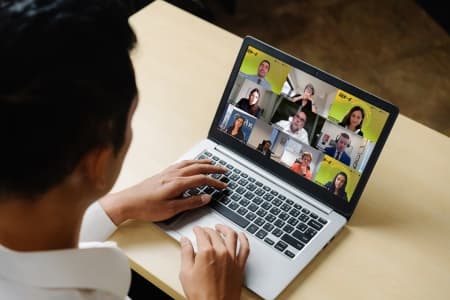
The shortlisted start-ups pitched their companies to a high-level jury panel during an online finale on Wednesday, 30 June 2021.

The five outstanding finalists are Beatriz Lorenzo Blázquez, Eneya Georgieva, Maria Wathne, Ourania Vlachou and Yağmur Can. The winner of the award will be announced on Thursday, 15 July!

Edutower

Entrepreneur: Yağmur Can

Country of origin: Turkey

‘Edutower’ is an online education platform that teaches 21st century skills to students and graduates who want to prepare themselves for the requirements of professional life. It was inspired by a realisation that education systems, schools and universities do not contribute sufficiently to the professional needs of students.

In combining the flexibility of online with the efficiency of offline, Edutower provides interactive courses lead by trained instructors, with tasks, workshops, quizzes, case studies and fun challenges all included in the package.

FindEUjobs

Entrepreneur: Beatriz Lorenzo Blázquez

Country of origin: Spain

FindEUjobs is a human capital enhancement portal that connects innovative companies with graduate students and interns across the European Union. It provides a unique opportunity for employers to post their open internship and junior positions and for candidates across the EU to apply. In this way, students are gaining an opportunity to launch their professional careers with the best companies both at home and abroad. Companies, on the other hand, will be gaining a pool of international talent and an opportunity to increase diversity in their workforce.

Paramate

Entrepreneur: Maria Wathne

Country of origin: Norway

Hydrogen sulfide, or H₂S, is a very toxic gas that can be produced in inaccessible areas in a fish farm. Sludge and accumulations of sediments that are left alone for a long time develop a H₂S-producing bacterium. Due to little research on H₂S, there are very few measuring instruments for fish farms today. This has resulted in breeders not trusting the existing instruments, in addition to not being sensitive enough.

Hydrogen sulfide outbreaks account for enormous financial losses, wastage as well as delays in production and delivery. Paramate is a simple and affordable innovation for the prevention of H₂S outbreaks, promoting better management of resources and the environment.

A sensor that measures H₂S levels in land-based fish farms will notify the fish farmers when changes in levels occur. An application is connected to Paramate's sensors, so that the H₂S values are available at all times. This gives the breeders a visual representation of the levels and gives the opportunity to react by notification.

Swim.me

Entrepreneur: Ourania Vlachou

Country of origin: Greece

Swim.me is a smart wearable device of an eco-friendly swimming cap and goggles for the orientation of blind swimmers. Through integrated waterproof sensors, the device notifies the athletes about the exact moment of the turn and their relative position in the pool with vibrations or sound alerts, enabling full user autonomy. The device is paired with application software to provide accurate performance analytics.

VR Lab

Entrepreneur: Eneya Georgieva

Country of origin: Bulgaria

VR LAB is a software-based virtual reality solution that allows for mobile 24/7 pre-clinical dental education and clinical decision-making support. The software application will be compatible with a wearable VR headset to be used by partner institutions, including medical universities and training centres.

Related items

News
5 Jun 2026

Celebrating Gala 2026

Updates
Read more
Read more about Celebrating Gala 2026
News
5 Jun 2026

Maltese start-up Medilert wins AmCham EU Youth Entrepreneurship Award 2026

Social impact, inclusion and skills
Read more
Read more about Maltese start-up Medilert wins AmCham EU Youth Entrepreneurship Award 2026
News
5 Jun 2026

Tech Sovereignty Package: positive steps for energy resilience, but a risky gamble for digital competitiveness

This week the European Commission unveiled its Tech Sovereignty Package. While the Package’s energy proposals mark a significant step forward for EU energy resilience, the Cloud and AI Development Act (CADA) proposal overlooks the reality of global technology supply chains and introduces significant legal uncertainty and fragmentation for businesses.

The central question for the Tech Sovereignty Package is how to build resilience without undermining competitiveness. Concerns around overdependence on a limited number of providers, the risk of external disruption to service continuity and the long-term position of the EU’s digital industries are all legitimate. However, greater sovereignty will only be sustainable if it is built on a competitive, diverse and innovative digital ecosystem. The technologies that underpin the global digital economy are developed through highly international supply chains, with innovation spread across multiple markets.

Viewed through this lens, the individual proposals in the Package vary in the extent to which they reinforce resilience while preserving openness and competitiveness. In particular, the proposed CADA risks discriminating against providers that rely on global supply chains – both those based in Europe and those in third countries – even where they offer superior resilience.

‘An origin-based approach is too blunt for such a complex global market’, said Malte Lohan, CEO of the American Chamber of Commerce to the European Union, commenting on the Package.

‘A more credible path to achieving greater resilience and control in such an interconnected landscape is to define sovereignty in terms of outcomes: secure and reliable technologies, customer choice, strong safeguards against undue interference and a business environment that supports investment and growth. That points to a risk-based framework where the EU is open to working with trusted partners. This trust should be assessed on the basis of objective standards rather than origin alone’, Mr Lohan added.

Last year alone, US technology firms operating in Europe and their supply chains supported €1.0 trillion in EU GDP, equivalent to 5.4% of total output. The scale of this contribution underscores the need for the EU to preserve an open environment with legal clarity and proportionality in any restrictions or safeguards that would impact commercial operations.

The Package’s Strategic Roadmap for Digitalisation and AI in energy is a positive step that could help unlock the benefits of digitalisation for Europe’s energy needs, enabling faster and more flexible grids. Digitalisation provides new opportunities to strengthen the reliability and resilience of energy systems. If executed well, the roadmap could support the growing demand of Europe’s digital and AI sectors for low-carbon energy.

Ultimately, the importance of the Tech Sovereignty Package extends well beyond the technology sector itself. Manufacturers, healthcare and life sciences, financial services, mobility, energy and retail all increasingly depend on access to advanced digital technologies to innovate and compete. For the Tech Sovereignty Package to support these sectors, it must ensure companies in Europe continue to benefit from economic openness.

Digital
Read more
Read more about Tech Sovereignty Package: positive steps for energy resilience, but a risky gamble for digital competitiveness