The Green Way: innovating for Europe’s sustainable future
Transitioning to a greener economy will be the challenge of our time. The European Union has an ambition to lead the green transition and American companies invested in Europe are committed to fulfilling that ambition. From decarbonising the energy sector to building sustainable food systems; from innovating sustainable mobility solutions to making the economy circular: American companies in Europe are innovating today to achieve a more sustainable tomorrow. Check out the steps our companies are taking towards Europe’s greener future!

Related items

Industry calls for repeal of the SCIP database
AmCham EU has joined over 30 industry associations in calling on EU co-legislators to confirm the repeal of the Substances of Concern In articles as such or in complex objects (Products) (SCIP) database, as proposed in the Environmental Omnibus. SCIP costs companies around €225 million a year, yet its intended users, recyclers, barely use it. The Commission itself acknowledges that waste operators find the data unusable and most companies lack the resources to maintain millions of notifications. Repeal would remove a disproportionate reporting layer while keeping obligations for suppliers to inform customers about substances of very high concern. Any future approach should build on existing obligations, not add new ones.
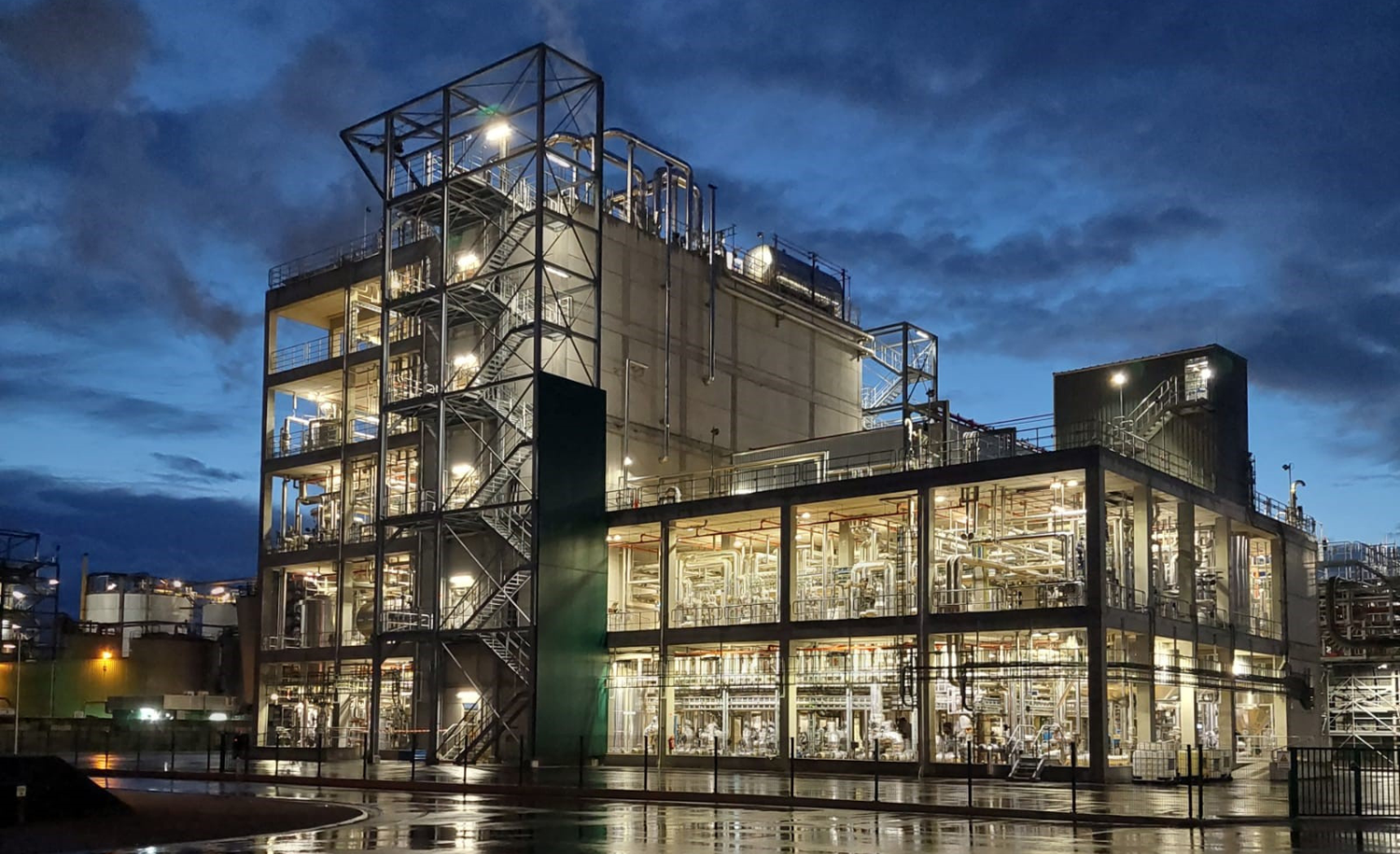
From fryer to fuel
After frying frites, bitterballen, churros or arancini, many people don’t think twice about disposing of used cooking oil. Yet one litre of waste oil can contaminate one million litres of water, according to the European Commission. At Cargill’s facility in the port of Ghent, Belgium, used cooking oil and other residual oils and fats are treated as raw materials, cleaned and converted into biodiesel for trucks and ships. This puts circularity into practice on an industrial scale at one of Europe’s largest facilities of its kind. Since production began, Ghent’s biodiesel is estimated to have reduced greenhouse gas emissions by 1,188,000 tonnes compared with fossil diesel, equivalent to taking about 550,000 cars off the road for a year. Read the full story on Invested in Europe.

Integrating the EU nexus approach into CS3D guidance
The European Commission’s forthcoming guidance on the Corporate Sustainability Due Diligence Directive (CS3D) should:
allow companies to voluntarily prioritise chains of activities with a meaningful connection, which should be further defined in the guidance, to the EU or based on a global risk-based approach in cases where companies have global integrated supply chains;
recognise that companies may face conflicting or overlapping legal requirements between EU and third-country legislation, particularly in relation to information gathering, audits, data transfers, supplier disengagement and cooperation with authorities;
clarify how companies should document and manage circumstances in which third-country law restricts or prevents a due diligence measure;
recognise interactions with competent local authorities, regulatory inspections, permits, licences and other official approvals as potentially relevant sources of due diligence information; and
protect companies from liability where they have followed a reasonable, documented and good-faith process, including where another stakeholder might have prioritised risks or selected due diligence measures differently.
If these measures are included in the guidance, they would help the CS3D deliver meaningful and effective due diligence, rather than an exhaustive mapping of every global business relationship. Flexibility, proportionality and legal certainty can help companies progressively develop credible global systems while directing resources towards the most significant risks and the areas where they have the greatest ability to achieve positive outcomes.
Learn more in our contribution and paper.
Policy priorities
Insights and advocacy driving Europe’s policy agenda. Our priorities support growth, innovation and a stronger transatlantic economy.
Membership
Connecting business and policymakers to strengthen the voice of American companies in Europe.