Cross-border data flows are the foundation of global trade and innovation in an increasingly digitised world. Following a recent US executive order approving the EU-US Data Privacy Framework, AmCham EU has joined together with the Information Technology Council (ITI) and other key industry associations to urge policymakers to adopt the framework's adequacy decision. Protecting transatlantic data flows is a step toward harnessing the power of data in the European economy. Read more in the full joint statement.
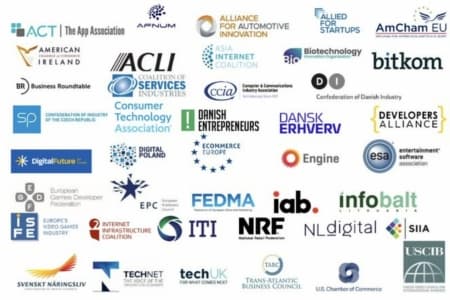
EU-US Data Privacy Framework: support from transatlantic organisations
Cross-border data flows are the foundation of global trade and innovation in an increasingly digitised world. Following a recent US executive order approving the EU-US Data Privacy Framework, AmCham EU has joined together with the Information Technology Council (ITI) and other key industry associations to urge policymakers to adopt the framework's adequacy decision. Protecting transatlantic data flows is a step toward harnessing the power of data in the European economy. Read more in the full joint statement.

Related items
Keeping the implementation of the EU-US deal on course
Ahead of the Committee on International Trade’s (INTA) meeting in the European Parliament on Monday, 26 January 2026, AmCham EU reiterates its call to advance the Commission’s tariff reduction proposals as part of the wider EU-US Framework Agreement. We understand MEPs’ caution following a week of renewed transatlantic tensions, but do not see the tariff reduction proposals as the right avenue for addressing these issues. The Framework Agreement remains the best available option for securing a more positive, productive EU-US trade and investment climate that helps businesses plan ahead.
As part of the Agreement, the EU and the US made a range of initial commitments. Last September, the US took its first step by updating its tariff schedule on EU products. The two tariff reduction proposals are how the EU shows its commitment to follow suit. This is just the start of the longer-term process of implementing the deal. Later, there will be opportunities to address other issues important to businesses on both sides of the Atlantic. A functioning EU-US economic relationship is critical to millions of American and European businesses and livelihoods.
:focal())
Cybersecurity Act review: AmCham EU calls for greater industry engagement and evidence-based certification criteria
The European Commission’s proposal to revise the Cybersecurity Act (CSA2) comes at the right moment, as Europe faces an evolving range of cyber threats. With its measures to reinforce ENISA and make harmonisation the key to a more resilient Single Market, the proposal brings the Act closer to the realities of today’s fast-moving cybersecurity ecosystem.
However, the Commission’s proposal still fails to go far enough on providing a platform for more active industry engagement. It rightly formalises existing structures but falls short of creating mechanisms that allow for regular expert-level exchanges and meaningful industry feedback into the CSA2 framework, building on lessons learned from the past years. Such exchanges are essential, given industry’s role as a front-line defender against cyber threats.
Now, as the file moves to the European Parliament and the Council of the EU, the co-legislators must ensure certification schemes under the CSA2 remain based on technical criteria. The EU’s cybersecurity needs should be a matter for sober, technical analysis. AmCham EU therefore supports the proposal's structural distinction between technical certification and non-technical supply chain risks. Maintaining this separation prevents restrictive requirements that limit choice, reduce competition and slow innovation.
The same approach is necessary for the proposal’s provisions to secure critical infrastructure under the new ‘Trusted ICT Supply Chain Framework’ (Title IV). These measures must also be underpinned by an objective, evidence-based approach to ‘non-technical risks’. At the same time, measures involving restrictions on data transfers must be aligned with international agreements to avoid unintended disruptions to global operations.
Ultimately, US companies share the EU’s commitment to securing the region’s digital resilience. AmCham EU members invest heavily in security and stand ready to support the delivery of a framework that keeps Europe open, secure and competitive.
EU-US: further escalation would threaten economy, security
The American Chamber of Commerce to the EU (AmCham EU) is concerned about recent developments that may fundamentally undermine the EU-US Framework Agreement and lead to tit-for-tat measures that will hurt American and European companies. If the dispute escalates, it could quickly spread across large parts of the economy, with far-reaching knock-on effects. It would cause severe damage to economic welfare and security on both sides. A negotiated outcome must urgently be found.
The rules-based international system brings certainty and stability to business relations around the world to the benefit of all companies operating across borders. When the time is right, both sides should seek to return to the spirit of the EU-US Framework Agreement, as the best available way to safeguard the EUR 8.7 trillion transatlantic economy.
Policy priorities
Insights and advocacy driving Europe’s policy agenda. Our priorities support growth, innovation and a stronger transatlantic economy.
Membership
Connecting business and policymakers to strengthen the voice of American companies in Europe.