AmCham EU’s 13th Annual Transatlantic Digital Economy Conference took place on Thursday, 5 November, under the theme Cutting through complexity. The event brought together policymakers, regulators and industry leaders to discuss how clear, workable frameworks and closer EU-US cooperation can bring more coherence to the digital landscape and support economic growth.
Digital Economy Conference 2026: in review
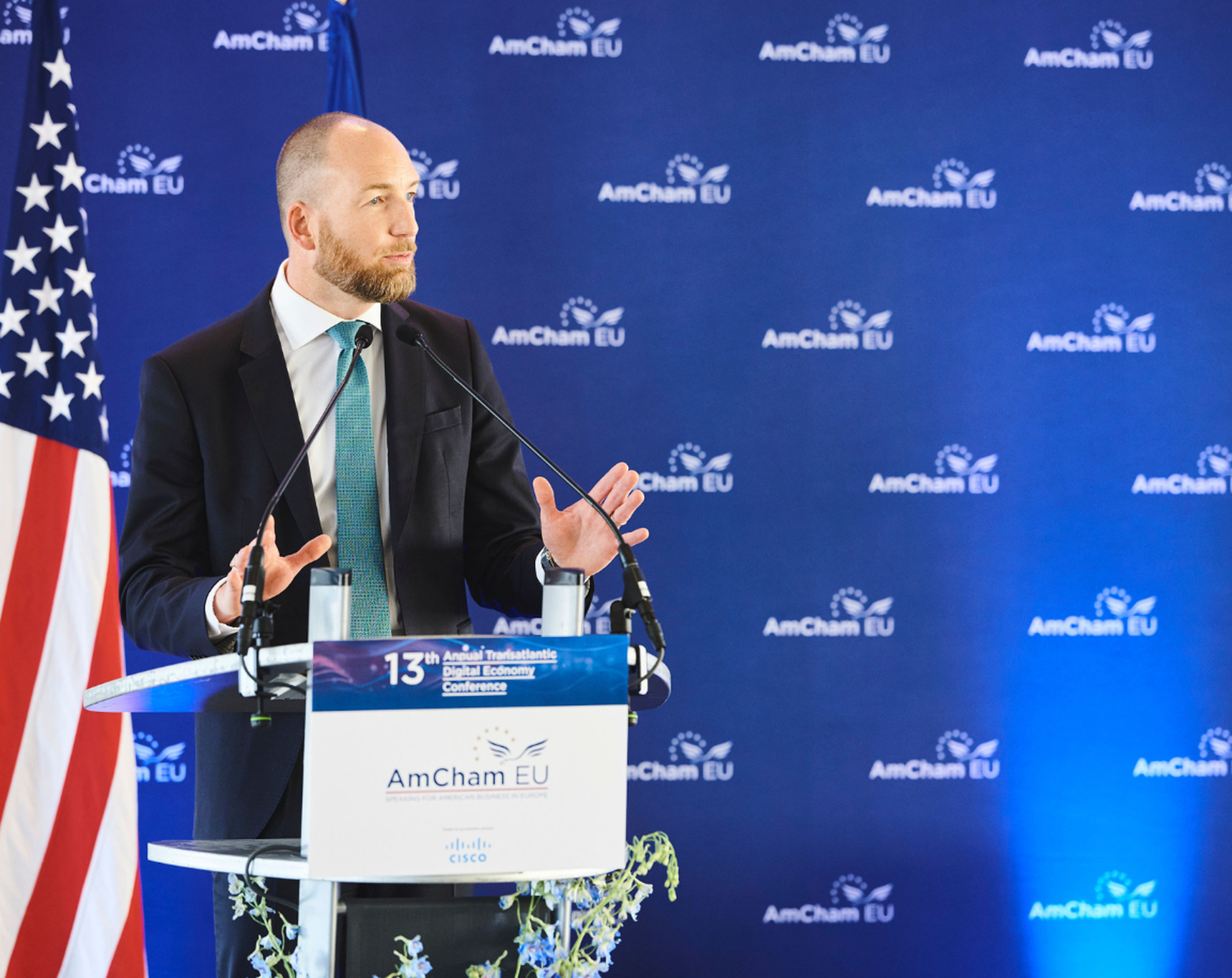
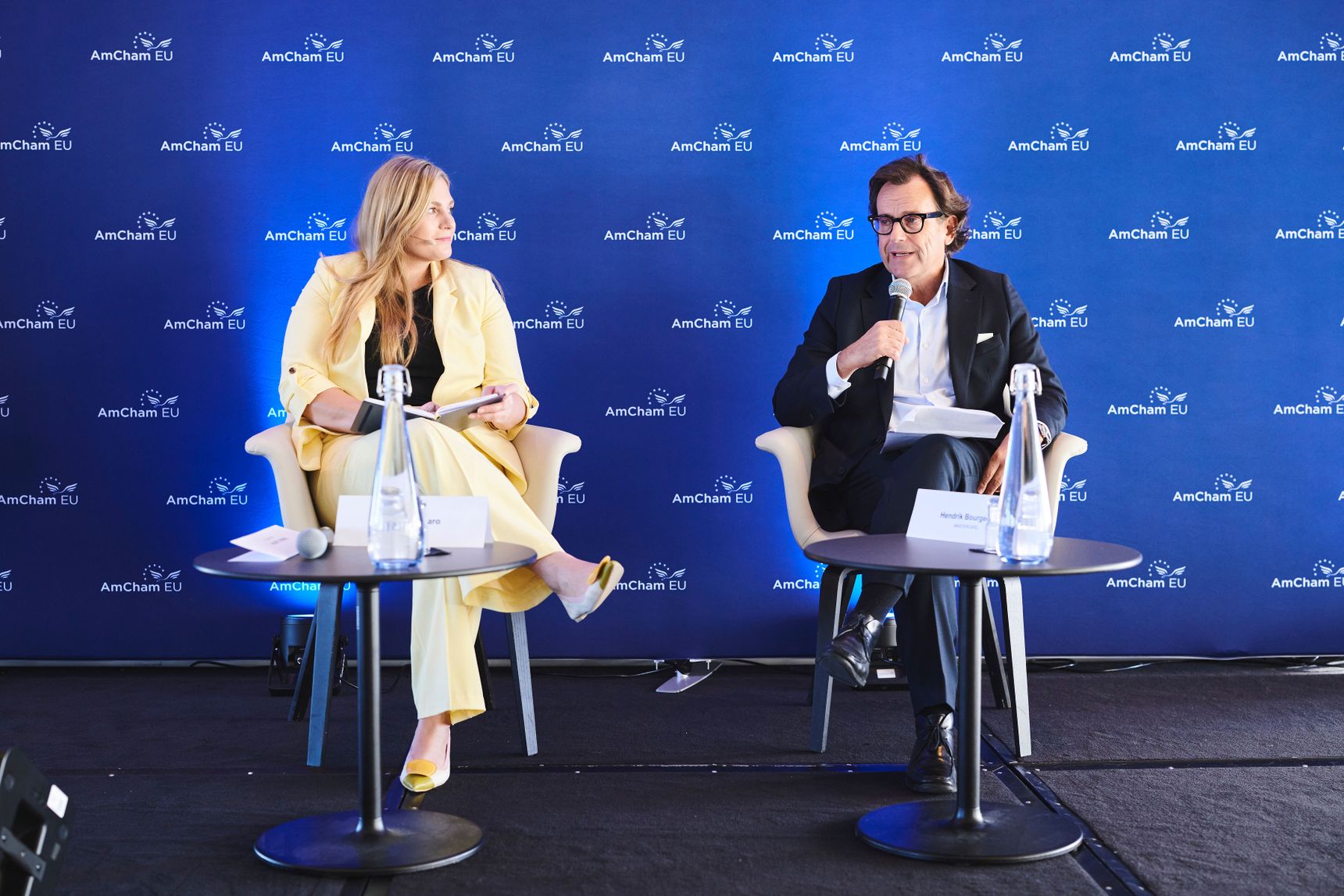
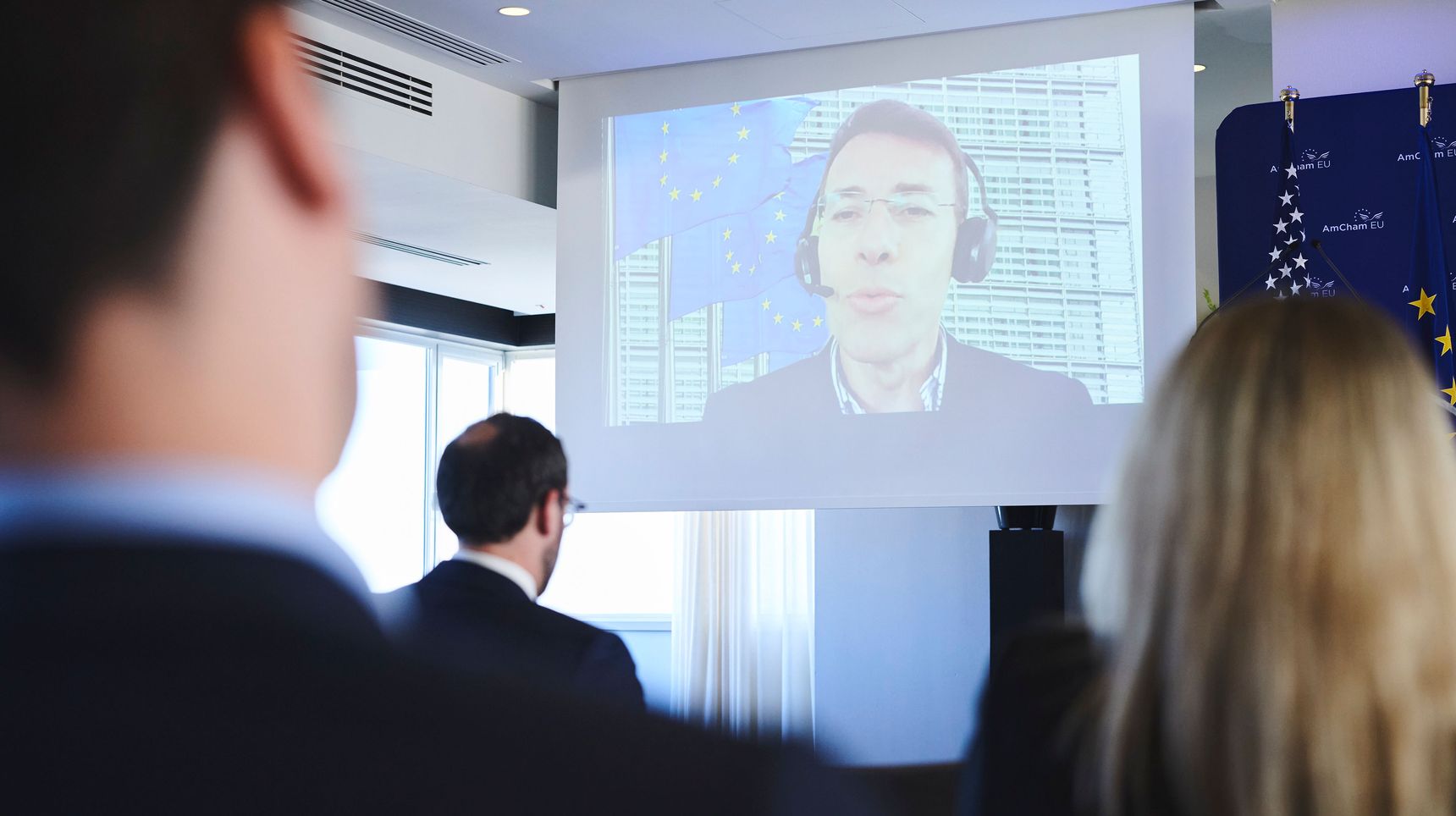
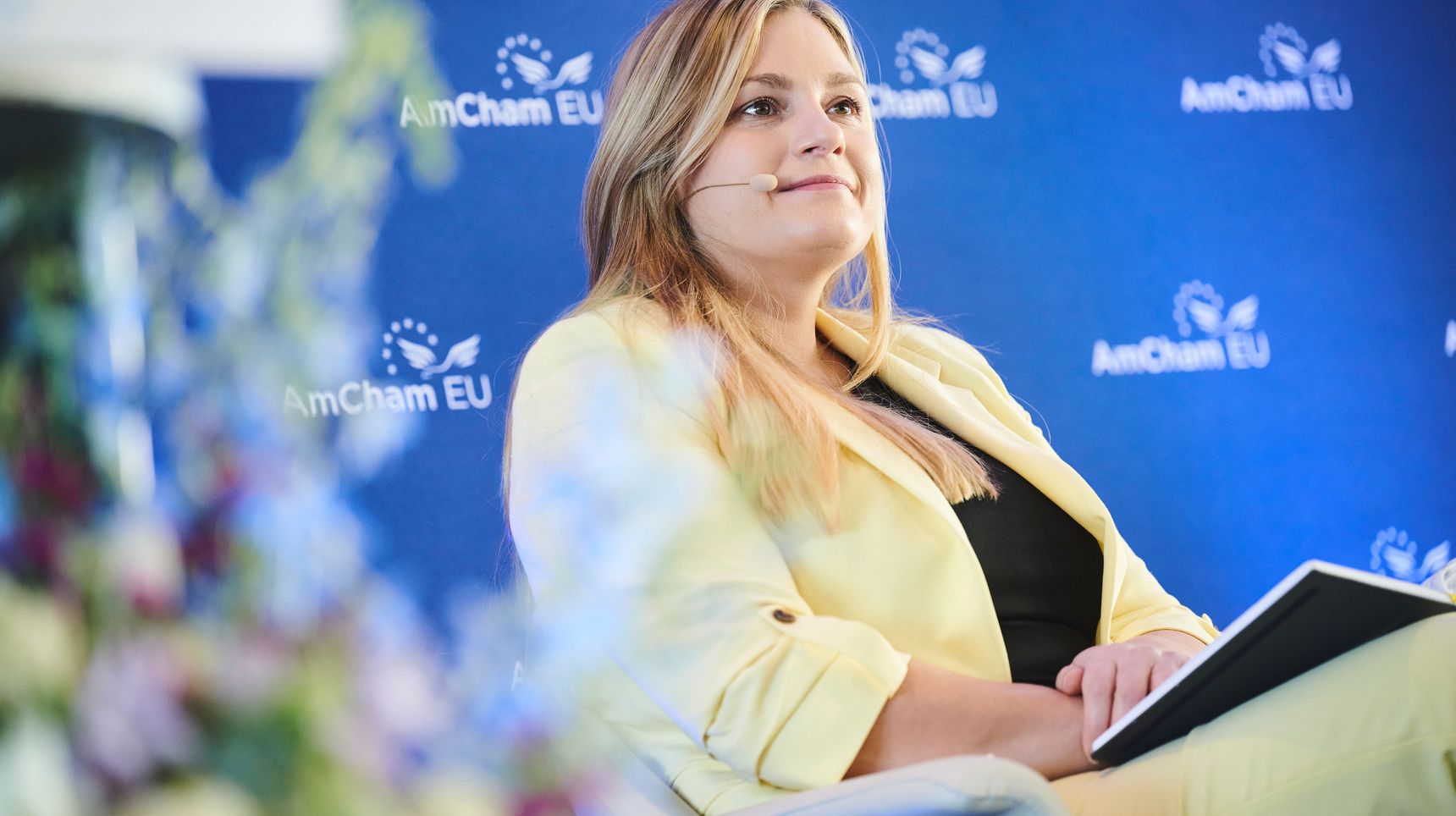
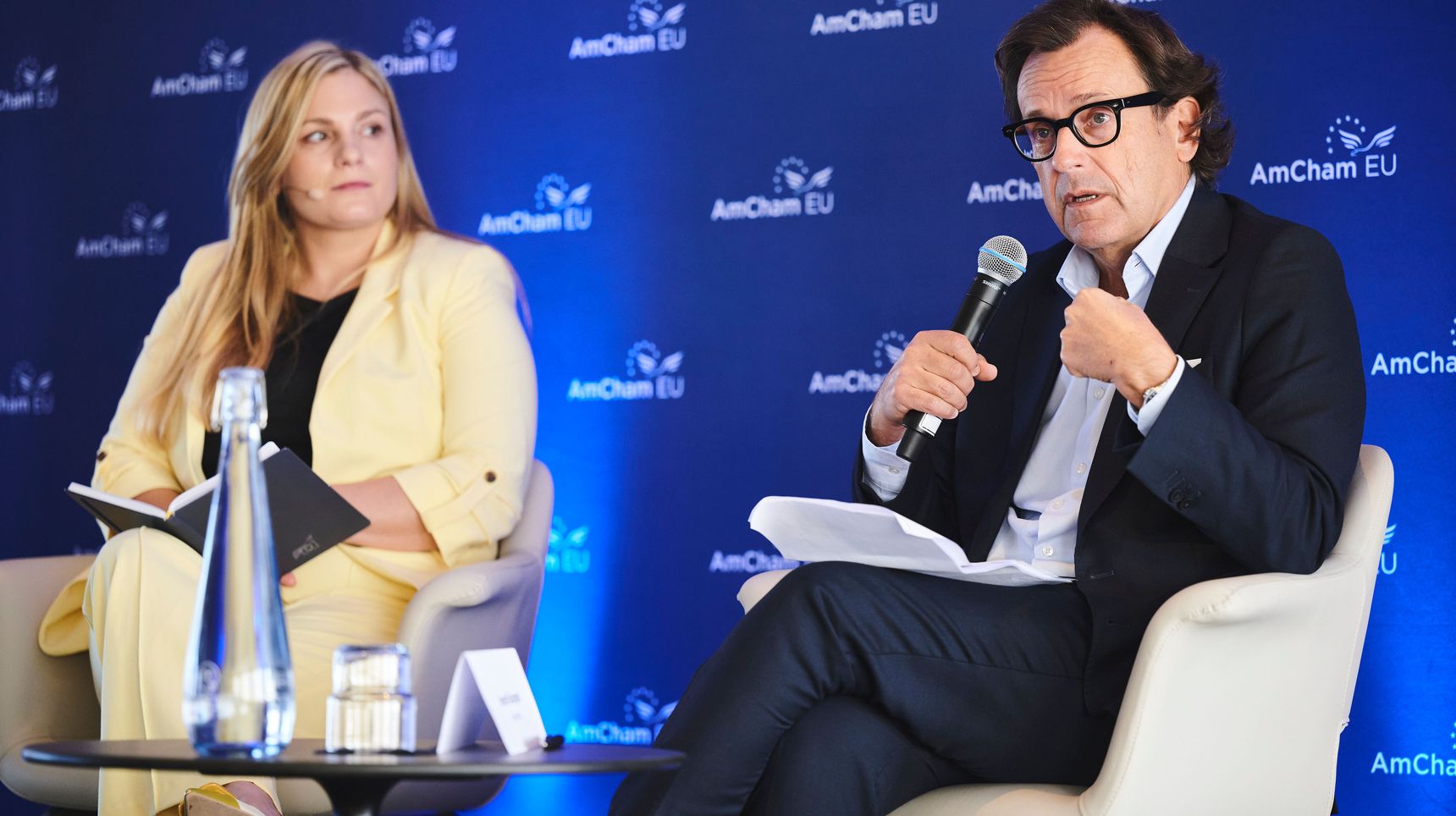
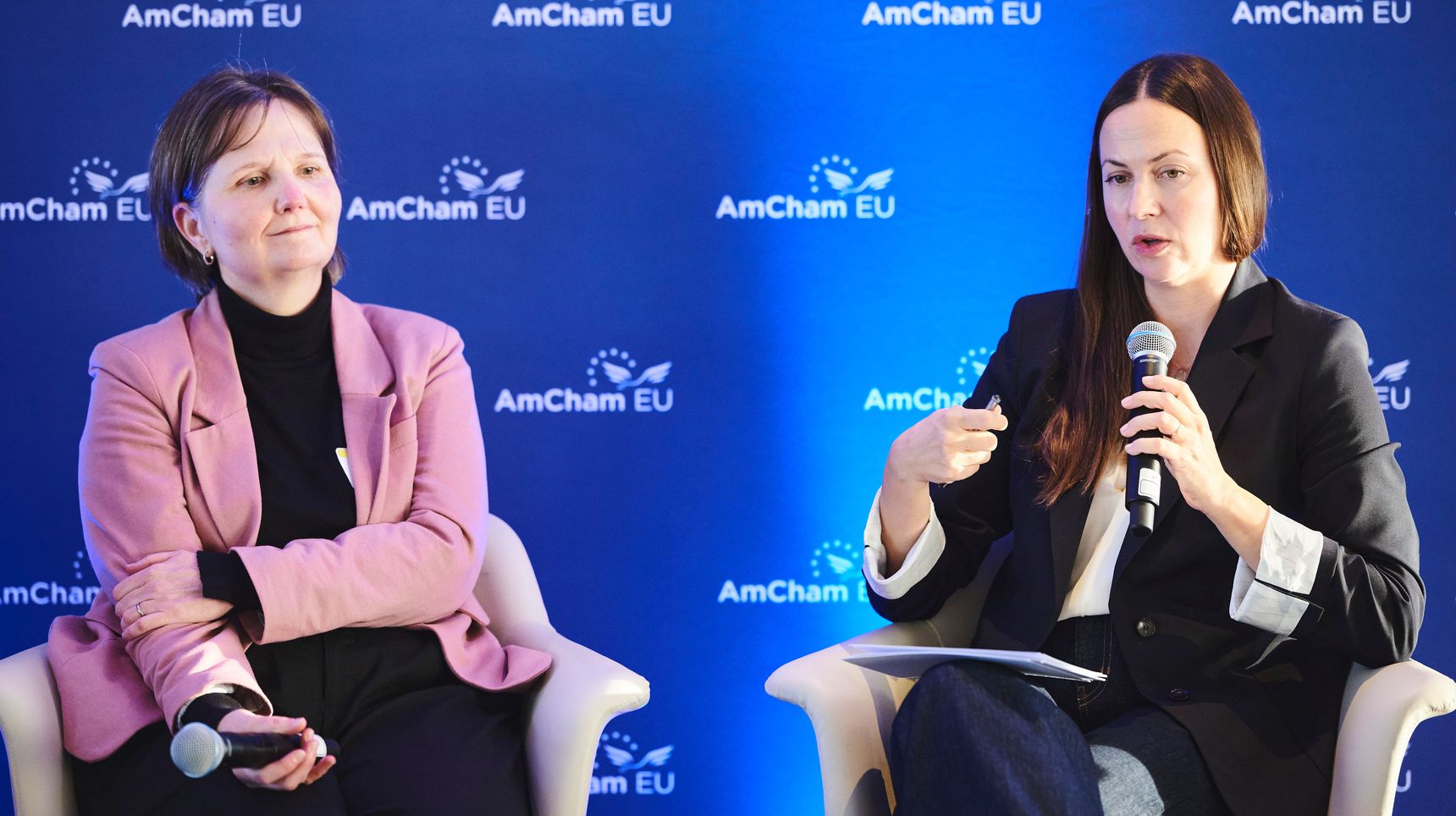
Moderated by Kait Bolongaro, Journalist, the first panel, The power of partnership: building a secure and sovereign digital Europe, explored how the EU and its partners can strengthen Europe’s digital security and sovereignty through cooperation, looking at it through a transatlantic lens. With the EU and US each other’s biggest partners in digital services, the discussion looked at what a secure and sovereign digital Europe means in practice. Hendrik Bourgeois, Senior Vice-President, Government Affairs and Policy, Europe, Mastercard, highlighted that trust and security are essential to digital services and depend on strong public-private cooperation. He spoke about sovereignty without unintended consequences, the need to keep driving growth, strategic diversification as the focus, and networks that can operate under stress. Thibaut Kleiner, Director, Future Networks, Directorate-General for Communications Networks, Content and Technology, European Commission, stressed that sovereignty doesn’t mean going it alone, it means building resilience through trusted partners, including by developing Europe’s own technology in critical areas.
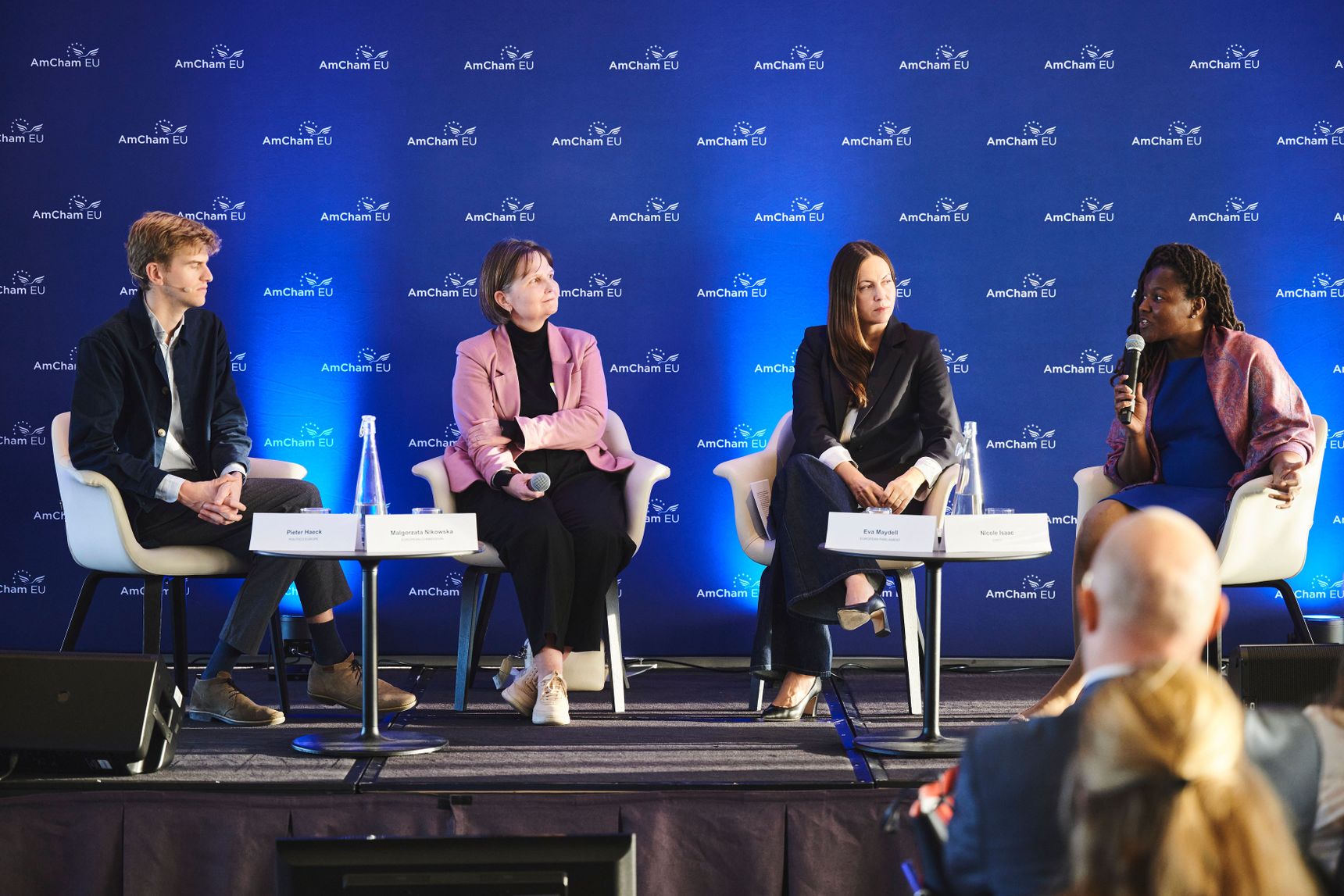
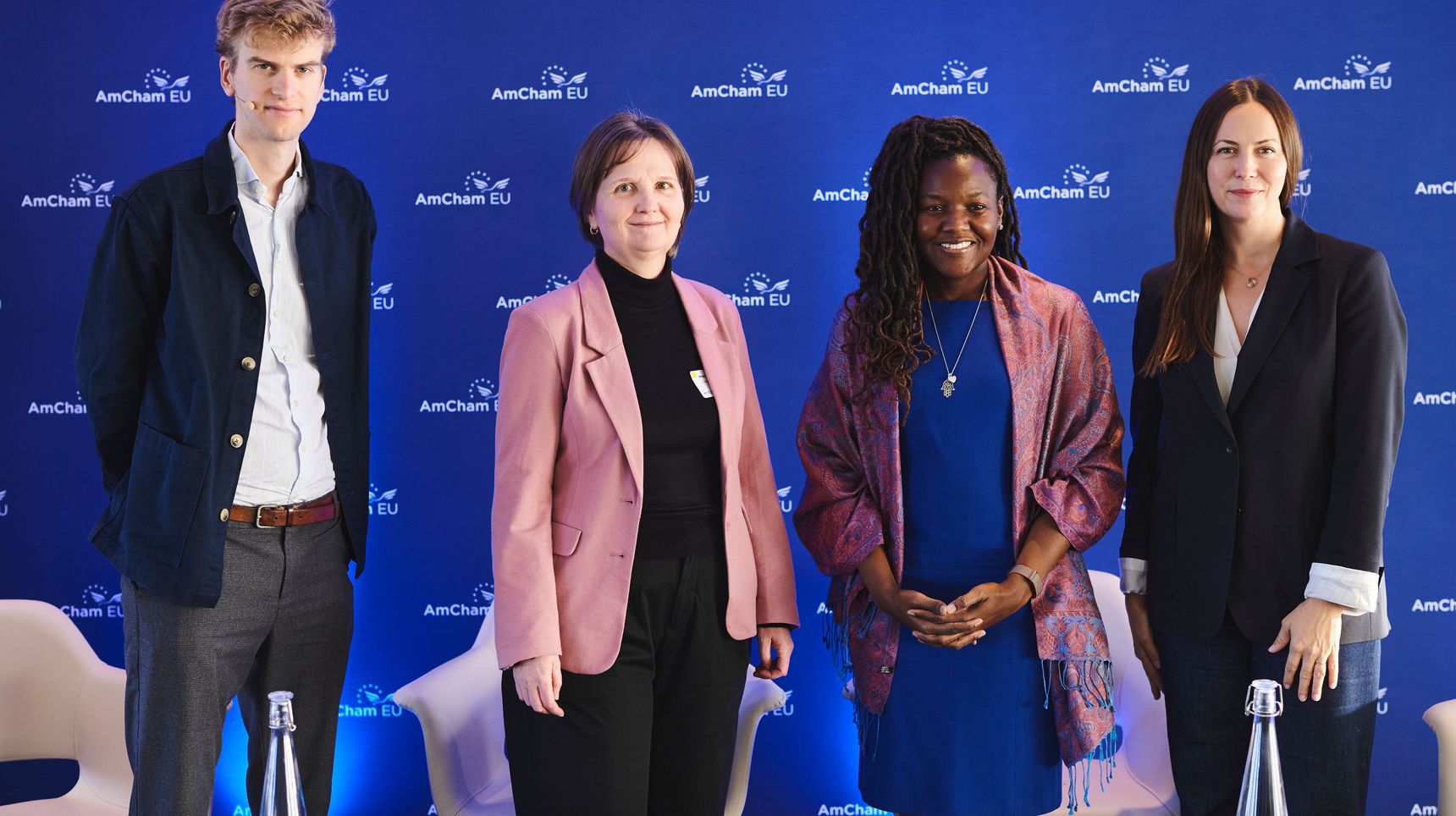
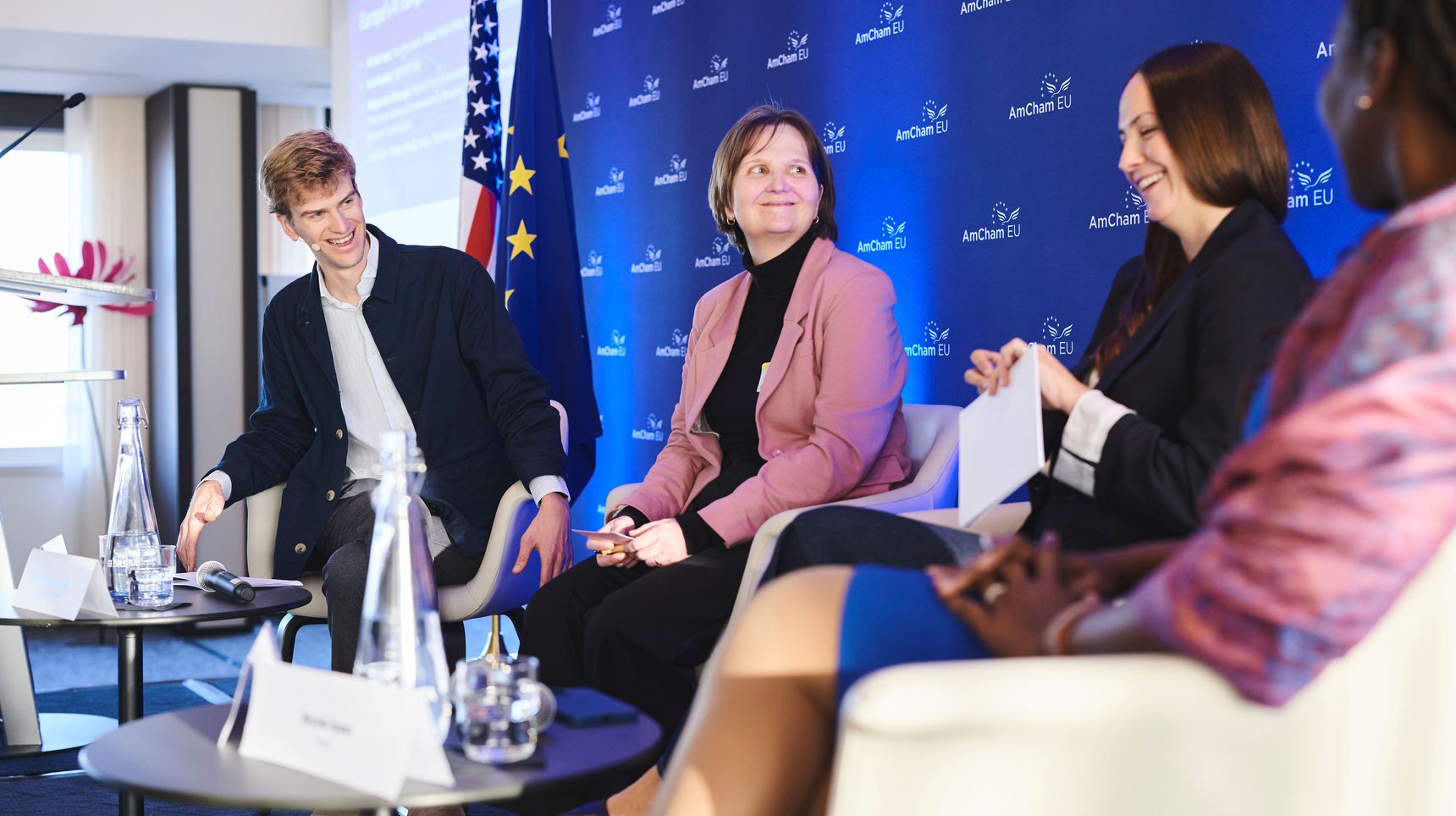
The conference continued with a second panel, From ambition to adoption: powering Europe’s AI competitiveness. Pieter Haeck, Senior Technology Reporter, POLITICO, moderated a discussion on what it takes to turn Europe’s AI ambitions into real-world uptake across the economy, and how Europe can speed up AI adoption. Nicole Isaac, Vice-President, Global Public Policy for Government Affairs, Cisco, spoke about powering an inclusive future, security at every layer of the AI stack, supporting countries around the world and public-private partnership. Eva Maydell, MEP (EPP, BG), focused on SMEs: collaborating with local innovation hubs to get AI in their hands, keeping it affordable, and offering simple tools that can be easily incorporated into the IT infrastructure they already use. Malgorzata Nikowska, Head of Unit, AI Innovation and Policy Coordination, Directorate-General for Communications Networks, Content and Technology, European Commission, underlined the steps public bodies are taking to support SME AI uptake, such as a single information platform for SMEs, a better understanding of the rules and their application, and local help for national SMEs, guiding them on AI use and testing.

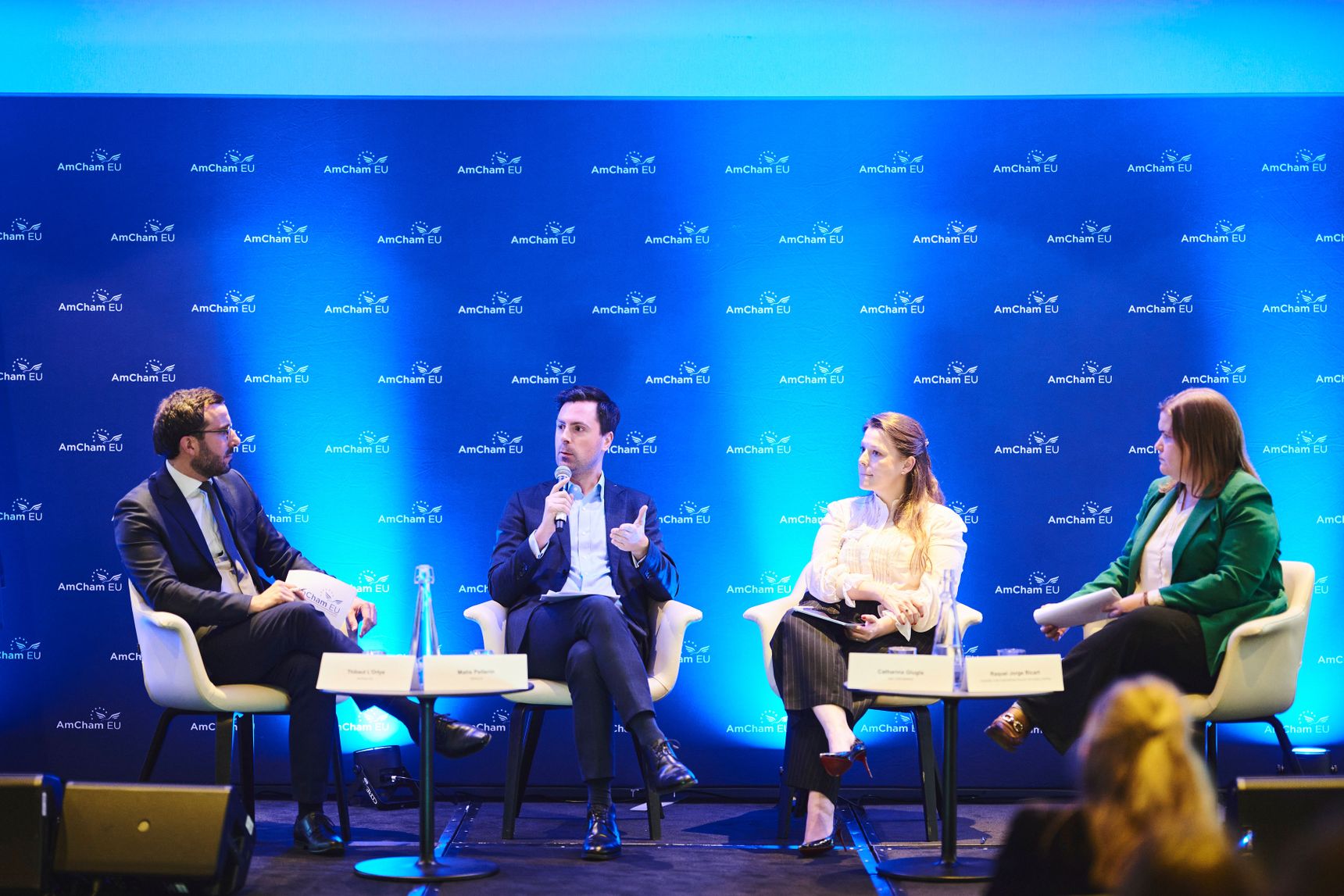
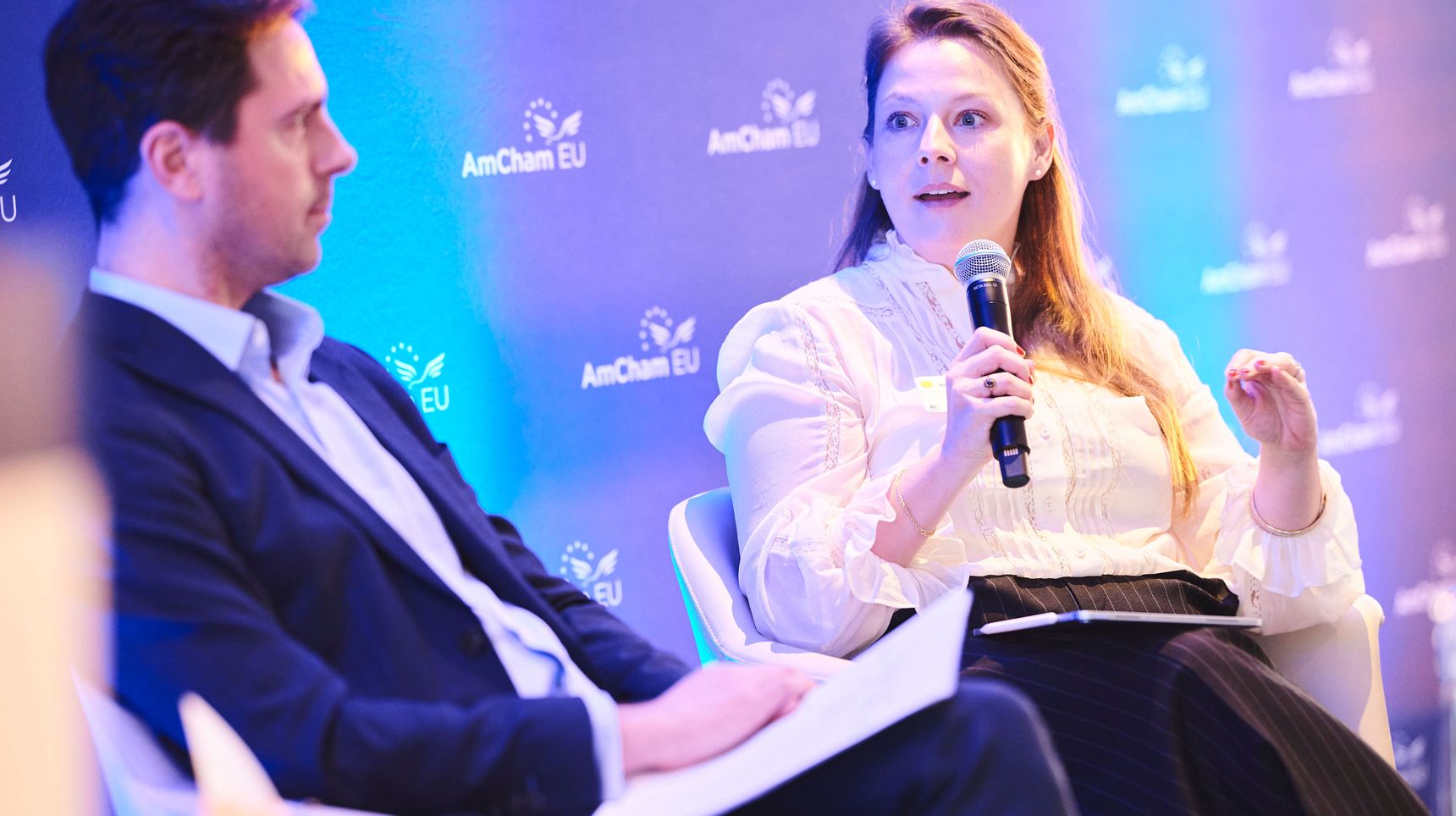
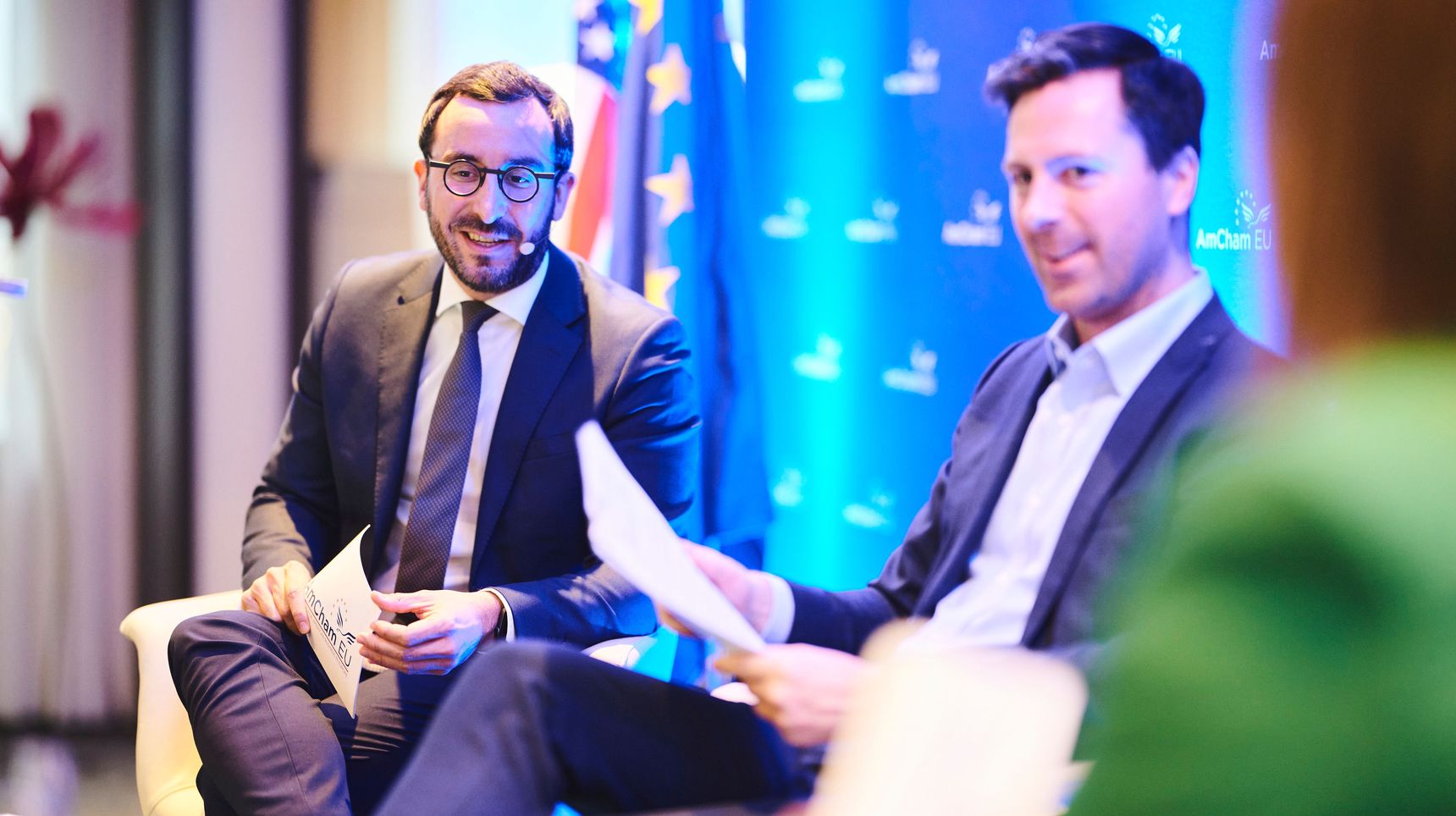
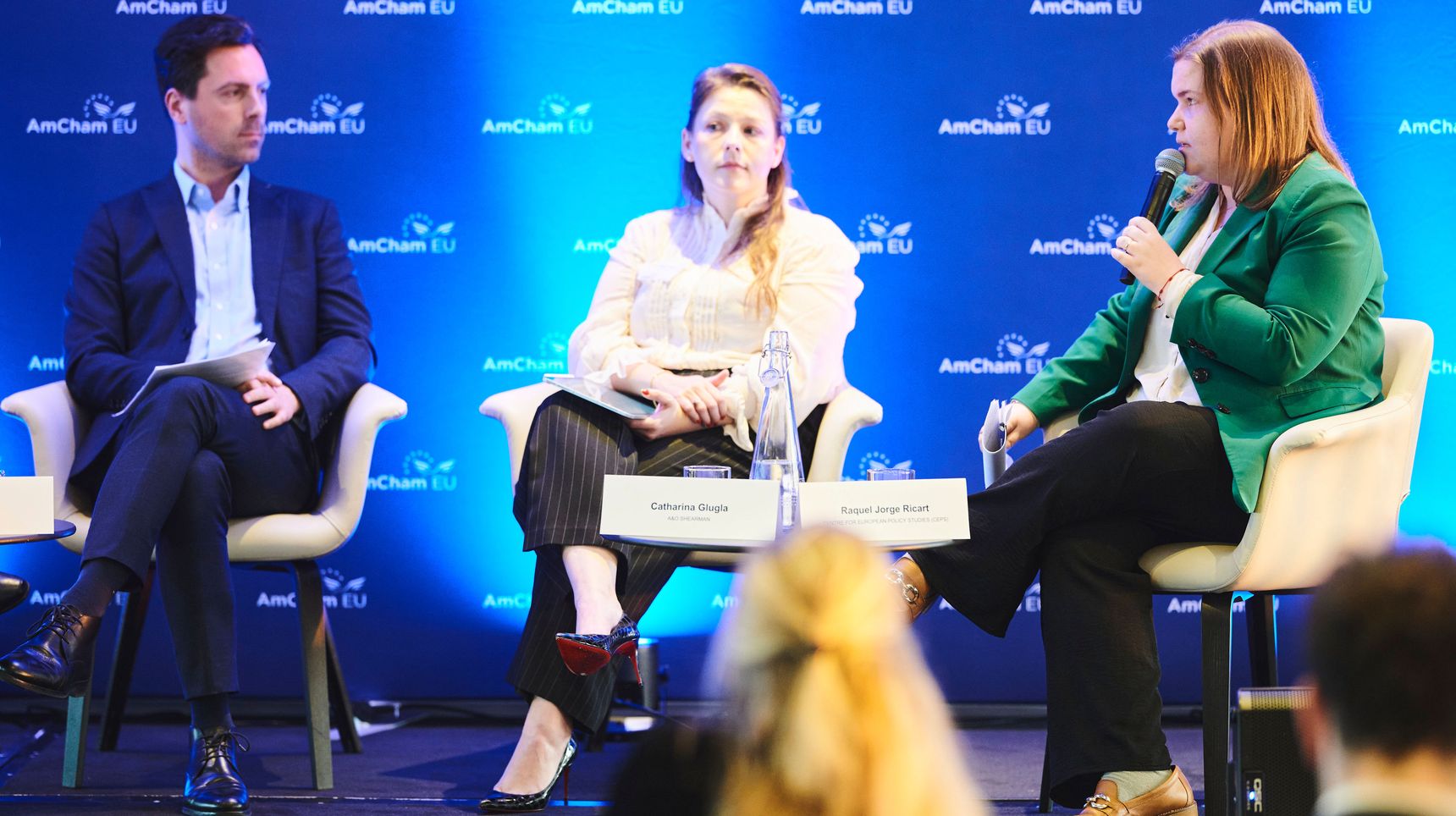
The third session, Reality check: is Europe delivering on digital simplification?, took stock of whether EU simplification efforts are delivering for businesses. Thibaut L’Ortye, Chief Policy and Public Affairs Officer, AmCham EU, moderated a discussion on how far the EU’s simplification agenda has come and what still needs to change. Catharina Glugla, Partner, A&O Shearman, underlined that simplification matters because companies find it hard to follow rules that are complex and overlapping. She highlighted next year’s digital fitness check as a good place to see where the overlaps are, and said simplification by design is crucial. Raquel Jorge Ricart, Associate Research Fellow, Centre for European Policy Studies, noted that there is only one digital initiative in the Commission Work Programme. She called for incentives for companies to take up emerging technologies, and for the investment and growth needed to keep companies in the EU. Matis Pellerin, Group Vice-President, Global Government Affairs, Oracle, shared lessons from other parts of the world on AI uptake in government and the private sector. He also raised the issue of regulation holding companies back from investing in the EU.

Malte Lohan, CEO, AmCham EU, closed the conference by thanking speakers and attendees, and by reiterating that a stronger transatlantic digital economy depends on clear rules and continued EU-US dialogue.
Thanks to everyone who attended, as well as our sponsor, Cisco.
Related items

Position Paper
7 Oct 2026
Making CADA’s sovereignty framework work for Europe
The success of the Cloud and AI Development Act (CADA) will depend on whether its sovereignty framework strengthens Europe’s resilience and competitiveness without restricting access to the technologies, providers and operating models needed to support the bloc’s digital transformation. As currently envisaged, several elements of CADA introduce origin-based restrictions that are not necessarily linked to genuine sovereignty, security or resilience risks. These measures could reduce competition, increase costs and slow cloud and AI adoption – ultimately working against CADA’s underlying objectives.
A sovereignty framework built on objective, risk-based criteria will better support Europe’s competitiveness, resilience and digital transformation than one based on origin, ownership or nationality.

News
7 Jul 2026
Branching out with AI
Meta’s open-source Canopy Height Maps helped the European Commission’s Joint Research Centre improve its 2020 Global Forest Cover map, demonstrating how artificial intelligence can strengthen Europe’s ability to monitor forests and advance climate and biodiversity goals. Developed with the World Resources Institute, the maps use Meta’s DINO self-supervised computer vision model to estimate tree height from satellite imagery. This helped researchers apply the five-metre threshold used in many international forest definitions and better distinguish forests from other tree-covered land, including agricultural tree crops. The resulting product, available through the EU Forest Observatory, provides one of the most comprehensive open views of global forest cover. Read more on Invested in Europe.

News
19 Jun 2026
Examining Europe’s AI ambitions with the Cypriot Presidency of the Council of the EU
How can Europe strengthen its digital resilience while remaining open to the partnerships that drive AI innovation? On Wednesday, 17 June, Malte Lohan, CEO, AmCham EU, addressed this at a conference organised by the Cypriot Presidency of the Council of the EU in Nicosia, Cyprus. Discussions focused on how Europe can build a more resilient digital ecosystem while remaining an attractive destination for investment and innovation. Mr Lohan underlined that secure supply chains and trusted partnerships are essential to Europe’s AI competitiveness. He also highlighted the role of US businesses as committed partners in helping Europe build and compete globally, while stressing the need for balanced policies that strengthen resilience and give companies the confidence to invest in Europe.
Policy priorities
Insights and advocacy driving Europe’s policy agenda. Our priorities support growth, innovation and a stronger transatlantic economy.
Membership
Connecting business and policymakers to strengthen the voice of American companies in Europe.