During the discussion, attendees heard from Dylan Gilbert, Privacy Policy Advisor; Amy Mahn, International Policy Specialist; Kat Megas, Program Manager, NIST Cybersecurity for Internet of Things (IoT) Program and Cheri Pascoe, Senior Technology Policy Advisor, National Institute of Standards and Technology Agency.
Cybersecurity with the experts
On Friday, 31 March, AmCham EU met with the National Institute of Standards and Technology Agency (NIST) to discuss work on digital identity. The meeting focused on the work being done on electronic ID cards and an overview on the EU-US Trade and Technology Council. They also discussed and gave updates on Cybersecurity Framework 2.0, Internet of Things Cybersecurity guidance and the Privacy Framework. The session then concluded after a Q&A and industry suggestion session with AmCham EU members.

Related items

Position Paper
10 Nov 2026
Making web scraping rules work for AI
The European Data Protection Board’s draft guidelines on web scraping for generative AI are an opportunity to provide greater legal certainty and support Europe’s AI competitiveness. However, some proposed requirements risk creating disproportionate burdens for AI developers.
A pragmatic, risk-based approach is needed to ensure the rules reflect the technical realities of AI development. This includes proportionate transparency obligations, recognition of the need for diverse training datasets and greater alignment with the AI Act and Digital Omnibus. Clear, harmonised rules are essential to protect personal data while enabling innovation.
Read our consultation response to learn more about the recommendations.
News
6 Nov 2026
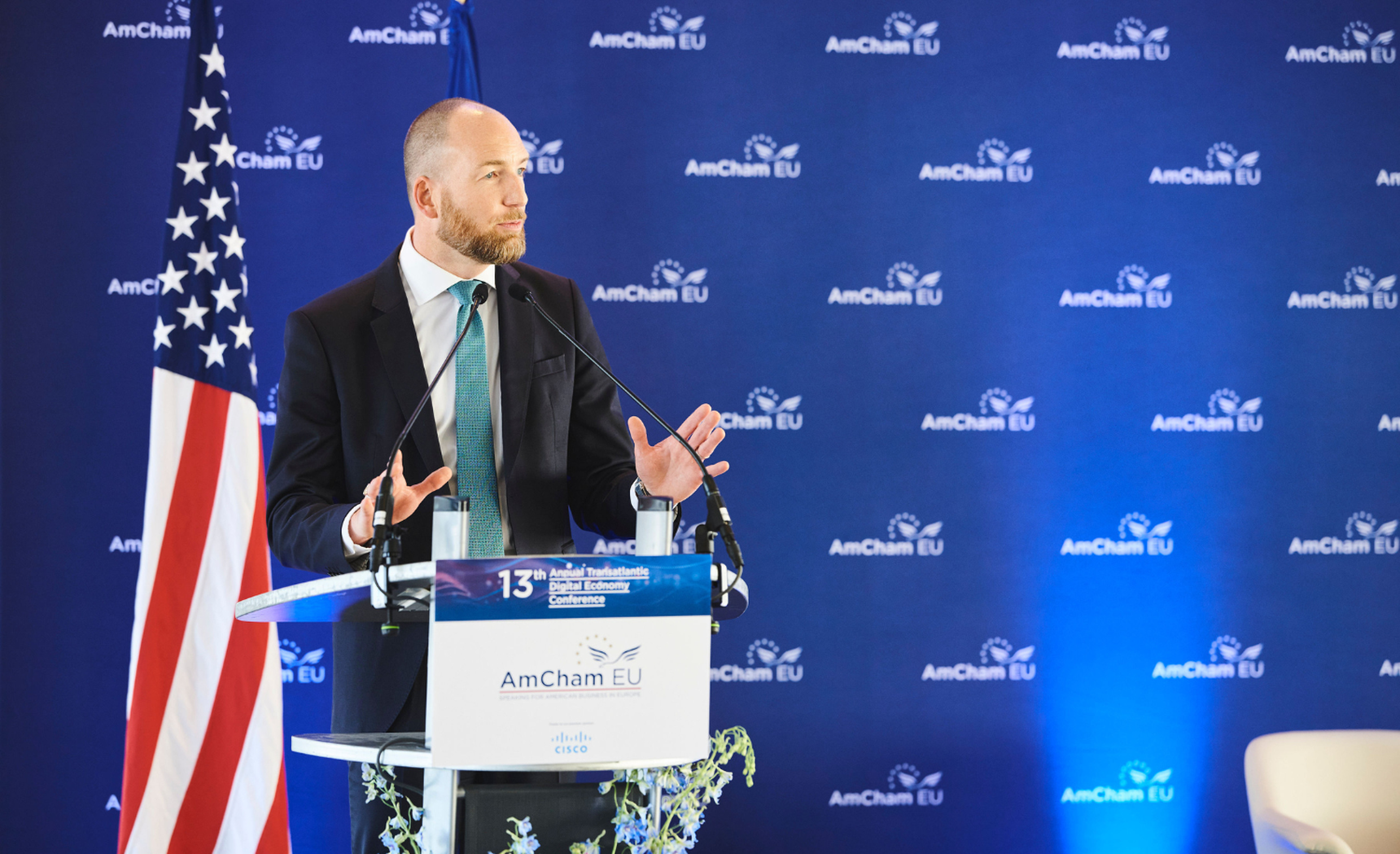
Digital Economy Conference 2026: in review
AmCham EU’s 13th Annual Transatlantic Digital Economy Conference took place on Thursday, 5 November, under the theme Cutting through complexity. The event brought together policymakers, regulators and industry leaders to discuss how clear, workable frameworks and closer EU-US cooperation can bring more coherence to the digital landscape and support economic growth.

Position Paper
7 Oct 2026
Making CADA’s sovereignty framework work for Europe
The success of the Cloud and AI Development Act (CADA) will depend on whether its sovereignty framework strengthens Europe’s resilience and competitiveness without restricting access to the technologies, providers and operating models needed to support the bloc’s digital transformation. As currently envisaged, several elements of CADA introduce origin-based restrictions that are not necessarily linked to genuine sovereignty, security or resilience risks. These measures could reduce competition, increase costs and slow cloud and AI adoption – ultimately working against CADA’s underlying objectives.
A sovereignty framework built on objective, risk-based criteria will better support Europe’s competitiveness, resilience and digital transformation than one based on origin, ownership or nationality.
Policy priorities
Insights and advocacy driving Europe’s policy agenda. Our priorities support growth, innovation and a stronger transatlantic economy.
Membership
Connecting business and policymakers to strengthen the voice of American companies in Europe.